ChaiViz
12.12.2025
Reviews
New Games 2025: December Week 2 Spotlight
Welcome back to another week of gaming coverage where the releases lean heavily into rhythm and creative experimentation. December's second week delivered an unexpectedly cohesive lineup of titles that challenge conventional gameplay expectations, from demonic skateboarding odysseys to card-battling journeys through spirit realms. Before we explore this week's new games 2025 releases, make sure to check out our esports predictions and analysis for comprehensive tournament coverage across Dota 2 and Counter-Strike 2. The industry news this week carries particular weight, with legendary developers making career-defining decisions that will ripple through gaming for years to come.
Game Releases
Skate Story
Platforms: PC, Switch 2, PS5
Release Date: December 8, 2025
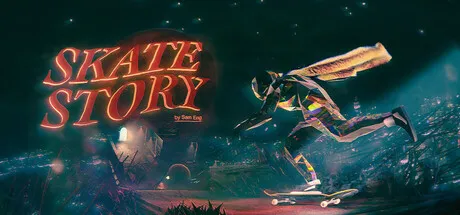
The premise alone sets this apart from anything else releasing this week. You're a demon constructed from glass and agony, given a skateboard by The Devil himself with a straightforward proposition: skate to the Moon, consume it, and earn your freedom. The setup reads like a fever dream collaboration between Tony Hawk and Dante's Inferno, and that's precisely what makes it compelling.
The gameplay centers on mastering the fundamental physics of skateboarding within an environment that actively resists your progression. The Emptylands present weeping concrete surfaces and precarious paths through nine distinct layers of The Underworld, each demanding increasing technical proficiency. The controls emphasize weight distribution and momentum management, turning every kickflip into a calculated ritual rather than a simple button press.
What elevates Skate Story beyond its surreal concept is the progression system. Over 70 tricks gradually unlock as you complete skate trials, with customization options for decks, wheels, and trucks that actually affect performance characteristics. The combat system integrates seamlessly with the skateboarding mechanics, allowing you to destroy hostile demons through technical prowess or simply impress them with a perfectly executed 360 flip.
The soundtrack deserves specific mention. Blood Cultures, the enigmatic New York artist, provides the foundation with psychedelic compositions that sync remarkably well with the visual aesthetic. Additional tracks by John Fio round out an audio experience designed to complement the hypnotic flow state skateboarding demands. The combination of surreal environments, technical skating mechanics, and atmospheric audio creates something genuinely distinctive in a genre that often struggles with innovation.
Death Howl
Platforms: PC, PS5, Xbox Series X/S
Release Date: December 9, 2025
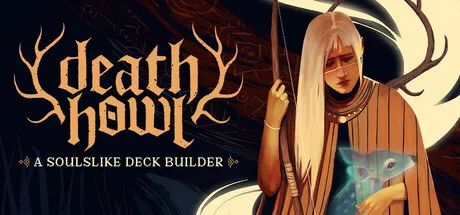
Deck-building roguelikes have saturated the market over the past few years, so Death Howl needs to justify its existence beyond genre conventions. The narrative foundation provides that justification. You inhabit Ro, a hunter driven by grief after losing her son, who crosses into the Spirit World seeking resurrection. The setup immediately grounds the mechanical systems in emotional stakes rather than abstract card collecting.
The scope impresses from a content perspective. The Spirit World fractures into four distinct realms spanning 13 unique regions, populated by over 30 enemy types. The 160-plus card pool enables legitimate deck archetype diversity, supporting strategies built around poison accumulation, strength scaling, sacrifice mechanics, retaliation chains, backstabbing opportunities, blocking tactics, and movement manipulation. Shamanic totems introduce persistent effects that fundamentally alter strategic approaches.
Grid-based combat distinguishes Death Howl from card battlers that use simpler lane systems. Positioning becomes crucial when facing enemies like Skulldogs, Crackle Bursts, and Woeful Seashrooms, each with distinct behavior patterns. Environmental hazards and beneficial terrain add another tactical layer, forcing constant adaptation rather than allowing players to settle into comfortable routines. Boss encounters and mini-bosses test your ability to synthesize deck synergies under pressure.
The 25-plus hour campaign suggests substantial narrative development beyond the initial grief-driven premise. Side quests reportedly affect deck composition through the choices you make, introducing consequence systems that extend beyond simple win-loss outcomes. The promise of spirits with potentially malicious intentions adds moral ambiguity to a genre that typically presents straightforward good-versus-evil dynamics.
Unbeatable
Platforms: PC, PS5, PS4, Xbox Series X/S, Xbox One
Release Date: December 9, 2025
Rhythm games live or die based on mechanical precision and musical quality, but Unbeatable attempts something more ambitious by integrating a complete narrative adventure around its core rhythm gameplay. The control scheme reduces complexity to two buttons handling up and down inputs, removing execution barriers while maintaining genuine difficulty through pattern complexity and timing demands.
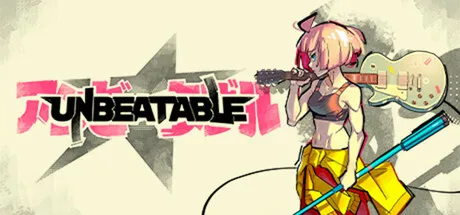
The narrative structure alternates between exploration segments where you control Beat, the pink-haired protagonist navigating a world where police presence feels oppressively omnipresent, and rhythm battles that escalate into massive setpieces. The writing exhibits self-awareness without descending into insufferable meta-commentary, acknowledging its anime influences while establishing its own tonal identity. The premise about forming connections with people targeted by authorities for nebulous reasons builds tension organically.
What separates Unbeatable from other rhythm-narrative hybrids is the full-featured arcade mode operating as a complete secondary game. This includes its own progression system, online functionality, modifiers that alter gameplay parameters, and a challenge board offering objectives ranging from simple completion goals to significantly more complex tasks. The extensive song library promises continued expansion, giving the arcade mode genuine longevity beyond the 6-8 hour story campaign.
The original soundtrack comprises an entire double album of compositions, supplemented by acoustic versions and remixes. Players can unlock all songs either through narrative progression or exclusively via arcade mode performance, respecting different player preferences. The visual presentation commits fully to its anime aesthetic, creating a cohesive artistic vision that supports both the narrative and gameplay components.
Rhythm Doctor
Platforms: PC, Xbox Series X/S
Release Date: December 6, 2025
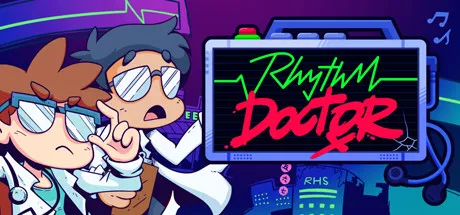
After years in early access, Rhythm Doctor reaches its full release with a concept that sounds absurd on paper but executes brilliantly in practice. You're defibrillating patients' hearts by hitting the spacebar on the seventh beat, with each patient suffering from conditions rooted in complex music theory. Polyrhythms, hemiolas, and irregular time signatures become medical diagnoses that you treat through rhythmic precision.
The genius lies in how the game teaches advanced musical concepts without explicit instruction. Each of the 20-plus handmade levels introduces a new rhythmic principle through gameplay rather than tutorial text. You develop understanding through repeated practice and pattern recognition, absorbing music theory fundamentals while focused on saving lives. This educational approach never feels condescending or heavy-handed.
The narrative wraps these mechanical lessons in an overarching story featuring a cast of doctors and patients with developing character arcs. The entire campaign supports drop-in, drop-out local multiplayer, making it accessible for couples or friends who want cooperative rhythm experiences. "Night Shift" difficulty versions of each level provide endgame challenges for players who master the core concepts.
The robust level editor deserves particular attention. Players can import their own music, place notes snapped to the beat, and utilize over 50 different visual effects and backgrounds. The community creation tools ensure continued content well beyond the developer-crafted campaign, potentially giving Rhythm Doctor lasting relevance in the rhythm game space.
Happenings in the Gaming World
Katsuhiro Harada Departing Bandai Namco After 30 Years
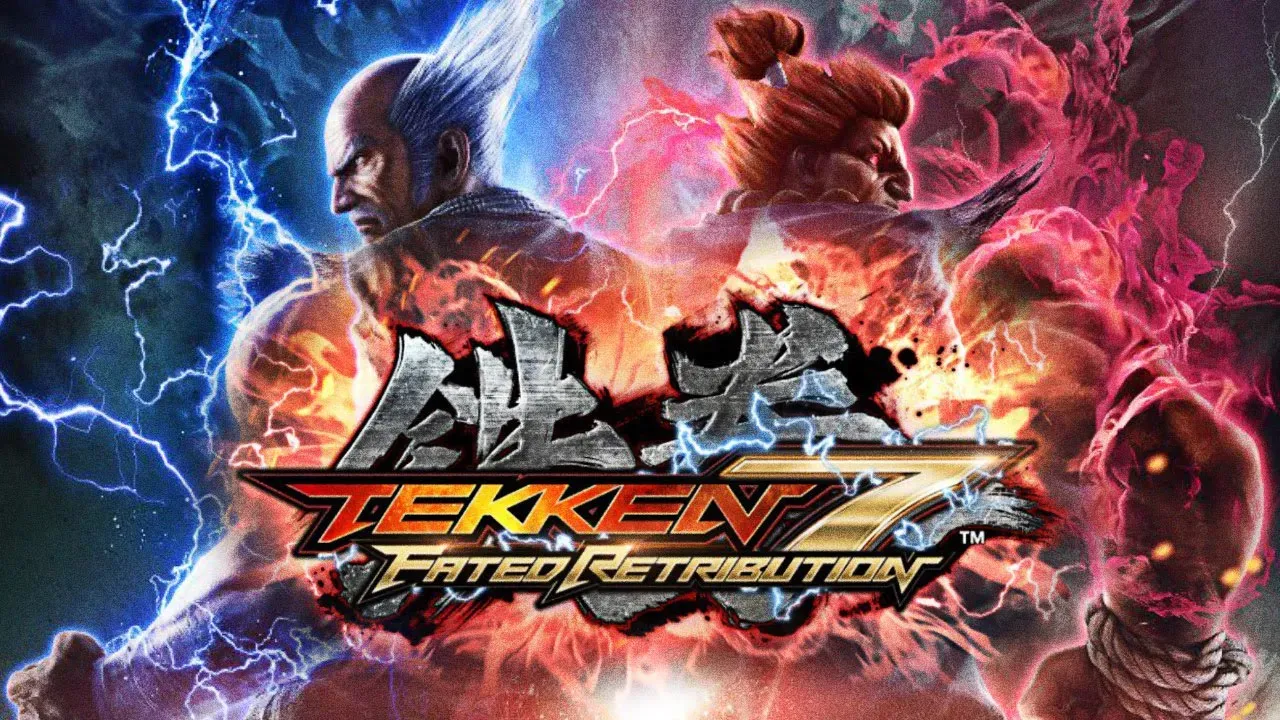
The Tekken franchise is losing its guiding force. Katsuhiro Harada announced via Twitter that he's leaving Bandai Namco at the end of 2025, closing a three-decade chapter where he shaped one of fighting games' most enduring series. The timing aligns with Tekken's 30th anniversary, which Harada identified as the appropriate moment to transition away from a project consuming much of his professional life.
The decision carries weight beyond simple career progression. Harada cited personal losses and witnessing colleagues retire or pass away as catalysts for reflecting on his remaining time as a creator. He sought guidance from Ken Kutaragi, former Sony Computer Entertainment CEO, whose advice supported the final decision. The departure appears carefully orchestrated rather than reactive, with Harada spending four to five years transferring responsibilities and passing along Tekken's narrative foundations to ensure continuity.
Bandai Namco's response attempts to reassure the community, confirming continued commitment to Tekken 8's development and content roadmap while promising to honor Harada's established vision through community feedback integration. Harada's attendance at the Tekken World Tour Finals, scheduled for January 26 through February 1, 2026, as a guest suggests an amicable separation. His next move remains undisclosed, though he clearly isn't retiring from the industry entirely.
Harada's career trajectory tells the story of the fighting game genre's evolution. Starting as a promoter at Namco in the early 1990s, he joined the original Tekken team in 1994 and directed every mainline entry from Tekken 3 through Tekken 8. His eventual promotion to general manager and global marketing manager in 2016 reflected Tekken 7's commercial success and his expanding influence within the company.
Tim Cain Returns to Obsidian Entertainment
Fallout's creator is back at Obsidian Entertainment. Tim Cain announced through his YouTube channel that he's rejoined the studio as a full-time, in-person employee five years after his initial departure. The return ends a period where Cain worked on contract basis for multiple companies, including continued contributions to The Outer Worlds 2.
The shift from contractor to full-time employee signals significant commitment to whatever project Obsidian has him developing. Cain acknowledged that non-disclosure agreements prevent him from discussing details, explicitly telling people not to bother guessing because they won't figure it out. His joking reference to being "a lot less retired" than before, nodding to his April 2023 Semi-Retirement video, suggests substantial involvement rather than a ceremonial role.
Cain's departure from Obsidian in 2020 followed nine years where he co-directed The Outer Worlds, establishing himself as crucial to the studio's creative direction. His comments about the 2020-2025 period characterize it as turbulent, with numerous projects started and cancelled across the industry. At least one game from his contract work will ship, though he expressed uncertainty about others reaching completion.
The historical significance of Cain's return cannot be overstated. He created the Fallout series and served as designer, producer, and lead programmer on the original game before designing Fallout 2. His subsequent work includes programming contributions to Vampire: The Masquerade – Bloodlines, South Park: The Stick of Truth, Pillars of Eternity, and Tyranny. Whatever Obsidian has him working on carries the weight of that creative legacy.
Netflix Assigns Zero Value to Warner Bros. Gaming Division

Netflix co-CEOs Greg Peters and Ted Sarandos delivered surprisingly blunt assessments about gaming's role in their proposed $82.7 billion acquisition of Warner Bros. during an investor call addressing Paramount's competing $108.4 billion counter-offer. When asked directly whether acquiring Warner's gaming assets enhanced Netflix's ambitions, Peters confirmed they did, but immediately clarified that the acquisition model attributed zero value to the gaming division despite its studios producing work like Hogwarts Legacy, the Mortal Kombat series, and the Batman: Arkham franchise.
Peters framed Warner's gaming operations as "relatively minor compared to the grand scheme of things," though he acknowledged excitement about incorporating properties like Hogwarts Legacy that have performed well commercially. The phrasing suggests Netflix views gaming as a bonus rather than a core acquisition driver, despite maintaining that Warner has great studios and talented developers offering clear opportunities.
The discussion revealed Netflix's current gaming strategy focuses on three areas. First, immersive narrative games based on existing Netflix IP. Second, kids' games providing safe spaces without in-app purchases or advertisements. Third, their exclusive mobile distribution deal with Rockstar Games, which Peters characterized as finding alternative distribution channels for story-focused IP. Netflix previously brought Grand Theft Auto to mobile, and the recent Red Dead Redemption mobile release topped charts, validating this approach.
Netflix's push into social games using TV apps with smartphone controllers represents another strategic direction. Games like LEGO Party! allow families to play together using their TV app with smartphones as controllers. Peters compared it to reinventing family game nights or extending the traditional game show format, claiming significant adoption rates. The range of gaming initiatives suggests experimentation across multiple formats rather than concentrated investment in any single approach.
Sarandos attempted to minimize Paramount's counter-offer impact, characterizing it as entirely expected while expressing confidence about completing the Warner Bros. acquisition. The framing positions gaming as peripheral to Netflix's core streaming business despite ongoing investments and experimentation across multiple gaming formats and distribution channels.
That wraps up this week's coverage. What caught your attention from these releases? The rhythm game revival seems genuine this time around, with multiple titles approaching the genre from different creative angles. And if gaming competitions interest you more than playing games yourself, we've got comprehensive coverage of esports tournaments. Check out our tournament predictions for expert analysis, or test your own forecasting skills with our Pick'ems system where you can predict match outcomes and potentially win items and skins from the Steam marketplace. Give it a try and see how your predictions stack up.
ChaiViz
12.12.2025
Reviews
Blog TAGS
New Games 2025
Skate Story
Death Howl
Unbeatable
Rhythm Doctor
News Feed
Loading...
Loading...
Loading...
Loading...
Loading...
Loading...
Loading...
Loading...
Loading...
Loading...