ChaiViz
17.01.2026
Reviews
New Games 2026: January Week 2 Spotlight
Welcome back to another week of gaming coverage where the release calendar refuses to slow down despite the new year barely settling in. This week brings an impressive spread of experiences ranging from sprawling Japanese role-playing adventures to intimate horror narratives that tackle social media's darker implications. Before we examine this week's new games 2025 lineup, make sure to visit our esports predictions and analysis for comprehensive tournament coverage across Dota 2 and Counter-Strike 2. The industry news section this week reads particularly grim, with major retailers shuttering hundreds of locations and tech giants abandoning VR investments after years of losses.
Game Releases
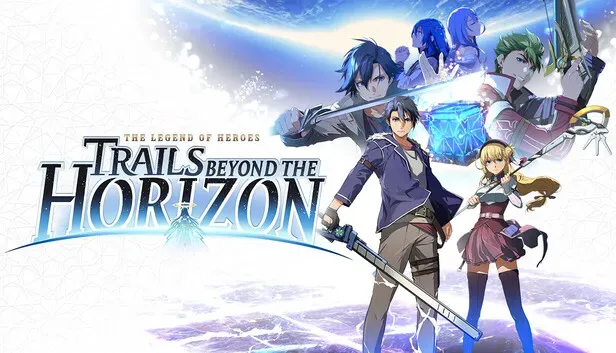
The Legend of Heroes: Trails beyond the Horizon
Platforms: PC, Nintendo Switch, Nintendo Switch 2, PS5, PS4
Release Date: January 15, 2026
Falcom's sprawling Trails universe continues expanding with this latest entry that brings together protagonists from multiple story arcs across three intertwining story paths. Van Arkride, Ashen Chevalier Rean Schwarzer, and Father Kevin Graham find themselves drawn into a high-tech training exercise orchestrated by Marduk, setting them on a collision course with secrets buried at the very foundation of the Zemurian continent. The premise revolves around humanity's first venture into space travel coinciding with prophesied apocalyptic events, creating narrative tension between technological advancement and existential threat.
The gameplay builds upon the hybrid system introduced in Trails through Daybreak, allowing players to transition seamlessly between action-packed Field Battles and strategic turn-based Command Battles. New mechanics include Shard Commands that leverage S-Boosts for tactical advantages, with each character and holo core offering unique abilities. Players earn game-changing abilities like grappling hooks, air gliding, and spider-like wall clinging to navigate the interconnected environments. Van's transformation into the Grendel exemplifies the Awakening system, which temporarily amplifies power during Field Battle sequences.
Perhaps the most intriguing addition is Z.O.C., a time manipulation mechanic that slows enemy movement to a crawl while dramatically increasing attack power and stun damage. This creates opportunities for extended combo strings against heavily armored opponents. The Grim Garten dungeon provides an endgame challenge where players can assemble custom parties from allies gathered throughout the Calvard Republic and beyond to stop Ouroboros' machinations, offering substantial replay value for those invested in the broader narrative universe. For veterans familiar with Falcom's meticulous world-building and character development across multiple interconnected series, this represents another substantial chapter. Newcomers should understand they're stepping into the middle of an ongoing saga that rewards deep familiarity with previous entries.
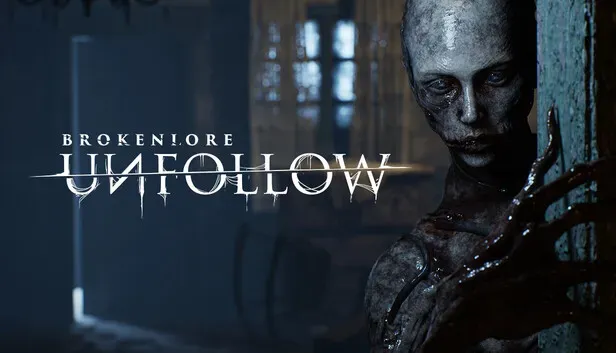
BrokenLore: UNFOLLOW
Platforms: PC, PS5
Release Date: January 16, 2026
This first-person psychological horror experience tackles contemporary anxieties about social media's psychological toll through the story of Anne, a bullying victim trapped in a surreal nightmare realm. The game directly confronts mental health issues, body dysmorphia, and the toxic dynamics enabled by online platforms, making it more than just another entry in the horror genre.
Anne must navigate environments populated by disturbing creatures that each symbolize different traumas from her past. The smartphone mechanic plays a central role, featuring numerous functions that tie directly into both puzzle-solving and the narrative's thematic concerns about digital dependency. The game explores how social media amplifies harassment and warps self-perception, presenting these abstract concepts through concrete horror imagery.
Multiple endings branch based on player choices throughout the experience, encouraging repeated playthroughs to fully understand Anne's situation. The voice cast includes notable content creators like The Sphere Hunter, Akidearest, Elsie Lovelock, and Sharla in Japan, lending recognizable performances to the supporting characters Anne encounters.
The subject matter demands careful handling, and the game appears committed to treating its themes with appropriate gravity rather than exploiting them for cheap scares. Whether it succeeds in balancing meaningful social commentary with engaging horror gameplay remains to be seen, but the ambition deserves acknowledgment.
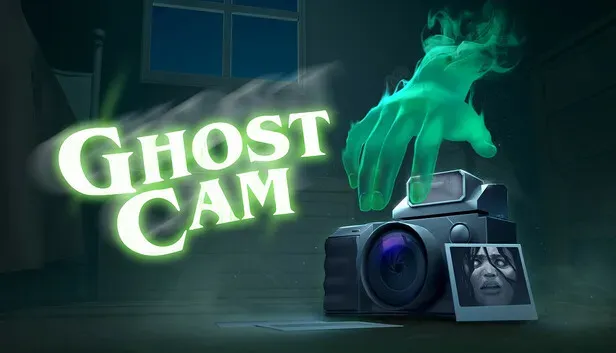
Ghost Cam
Platforms: PC (VR and non-VR)
Release Date: January 19, 2026
Ghost photography gets the VR treatment in this paranormal investigation experience that blends Fatal Frame-style spirit hunting with escape room puzzle design. Players wield a Polaroid-style camera and flashlight while exploring what initially appears to be an abandoned bedroom but gradually transforms into a labyrinthine dreamscape filled with spectral phenomena.
The core loop revolves around capturing ghosts on film while uncovering a hidden narrative about childhood horse obsession, heartache, and vintage horror aesthetics from the 1970s and 1980s. The developers lean heavily into liminal space design, creating environments where faded ribbons, dusty stables, and ghostly hoofbeats evoke persistent unease. The aesthetic specificity suggests deeply personal creative vision rather than generic haunted house tropes.
Performance directly impacts your Ghost Hunter ranking, encouraging players to thoroughly document supernatural encounters. The puzzle design requires using the camera to reveal hidden clues and solve mysteries that grant access to deeper layers of the experience. The shifting nature of the environments means spatial relationships change based on spiritual activity, preventing simple backtracking strategies.
The relatively focused scope, exploring variations on a single bedroom transformed into something much larger and stranger, could work in the game's favor. Tightly designed horror often proves more effective than sprawling campaigns that dilute their atmosphere across too many locations.
MIO: Memories in Orbit
Platforms: PC, Nintendo Switch, PS5, Xbox Series X/S
Release Date: January 17, 2026
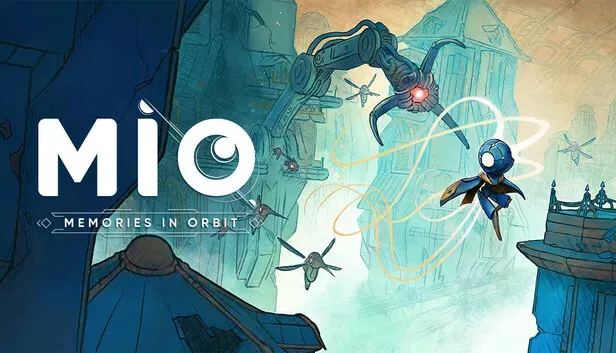
This metroidvania presents a visually distinctive take on the genre, following MIO, a nimble robot awakening aboard the Vessel, a derelict space ark drifting through the void. The ship's AI caretakers, known as Pearls, have mysteriously ceased functioning, leaving this massive technological structure overgrown with vegetation and overrun by corrupted machines. MIO must delve into the Vessel's depths to restore lost memories while uncovering personal history and ultimate purpose.
The art direction draws inspiration from comics, paintings, and anime, creating a universe filled with intricate environmental details. The dynamic soundtrack blends lo-fi beats with choral melodies, establishing an atmospheric foundation for exploration. Progression follows traditional metroidvania structure, with game-changing abilities like grappling hooks, air gliding, and wall climbing unlocking access to previously inaccessible areas throughout the interconnected labyrinth.
Combat features over 30 distinct enemy types and 15 guardian bosses, each with unique movement patterns and fighting styles. The arsenal includes the Hook for evasion and grappling, orbs as projectiles, and decoy clones for strategic positioning. The customization system allows players to modify abilities by scavenging enemy components, transforming the grappling hook into either a deadly lasso or enhanced mobility tool depending on preferred playstyle.
The upgrade system includes Modifiers that let players sacrifice certain capabilities to enhance others, creating build diversity across multiple playthroughs. The emphasis on precision platforming, rhythm, and timing suggests the developers prioritize mastery and flow state gameplay over forgiving, accessible design. Players seeking challenging traversal paired with artistic presentation will find plenty to appreciate here.
Happenings in the Gaming World
Rainbow Six Siege Recovers from Dual Security Breaches
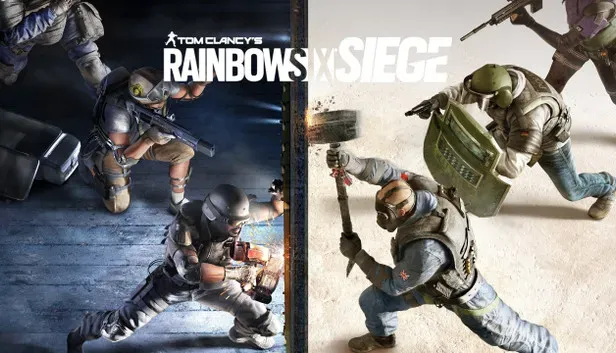
Ubisoft's competitive shooter endured a tumultuous holiday period as hackers exploited vulnerabilities twice within a two-week span, forcing complete service shutdowns. The first breach occurred during Christmas weekend, with attackers distributing 2 billion credits and renown to players, issuing fake bans against Ubisoft employees for "toxic behaviour," granting rare premium and developer skins, and randomly banning thousands of legitimate users.
The development team took to social media announcing the intentional shutdown of both the game and its marketplace while engineers worked to resolve the compromise. They assured players that spending the illicitly distributed credits would not result in punishment, implementing a rollback for all transactions occurring after 11 AM UTC on December 27th. A separate legitimate ban wave coincidentally occurred during this period, adding confusion to an already chaotic situation.
The team appeared to have contained the damage by December 28th, but a second attack surfaced on January 4th when players received 67-day bans for "Harassment Offense." The ban duration referenced a popular TikTok meme, making the attack's trolling nature explicit. Ubisoft quickly clarified on January 5th that any bans issued between 1 PM and 5 PM EST on January 4th were unauthorized and could be disregarded.
Both incidents have been fully resolved at the time of publication, with all platforms showing normal operational status. The breaches raise serious questions about server-side security in live service games, particularly for titles with in-game economies and premium currency systems.
GameStop Closure Wave Accompanies Extraordinary CEO Incentive Plan
The struggling retail chain faces another round of massive contractions as over 470 US locations close during January 2026, representing roughly a quarter of the company's domestic presence. Sources confirm the closures through employee reports and official store locator data.
The company's international retreat continues following the 2025 sale of Canadian operations. GameStop has systematically exited European markets including Germany, Italy, Austria, and Switzerland, maintaining only French stores. The Oceanic EB Games division is considering complete withdrawal from New Zealand, affecting approximately 38 retail locations and a distribution center. Managing Director Shane Stockwell cited multi-million dollar losses during fiscal 2024 and unsuccessful turnaround efforts including administrative staff reductions.
On January 31, 2026, EB Games confirmed all New Zealand operations will cease. These closures coincide with an extraordinary compensation structure for CEO Ryan Cohen. The Board of Directors announced a performance-based incentive worth $35 billion, requiring GameStop's market capitalization to reach $100 billion alongside $10 billion in cumulative earnings. The current market cap sits at approximately $9.3 billion, making the targets exceptionally ambitious.
The announcement emphasizes that Cohen receives no guaranteed salary, cash bonuses, or time-vested stock. Compensation remains entirely at-risk, distributed across nine incremental thresholds tied to specific market and operational milestones. Whether this structure motivates transformative growth or simply rewards potential failure with minimal consequences remains contentious among shareholders and industry observers.
Meta Abandons VR Game Development After Years of Losses
Reality Labs division layoffs will eliminate over 1,000 positions in January 2026 as Meta pivots investment toward AI and wearable technology. Three internal game studios face permanent closure: Armature Studio, Sanzaru Games, and Twisted Pixel.
Armature Studio, founded in 2008, shipped titles including Batman: Arkham Origins Blackgate and various port projects before Meta acquired them in 2022 following their Resident Evil 4 Meta Quest port. Sanzaru Games, established in 2006, developed Secret Agent Clank and Sly Cooper: Thieves in Time before transitioning to VR with the critically acclaimed Asgard's Wrath series. Meta acquired them in 2020, and their 2023 sequel Asgard's Wrath 2 received widespread critical praise.
Twisted Pixel rose to prominence during the Xbox 360 era with titles like The Maw and 'Splosion Man before shifting to Oculus Rift development. Meta acquired them in 2021, and they recently shipped Marvel's Deadpool VR in 2025.
The closures follow Ready At Dawn's shutdown in August 2024, another studio known for PlayStation development before transitioning to Oculus projects like Lone Echo. Reality Labs continues posting billions in quarterly operating losses despite revenue increases, with Q3 2025 showing $4.4 billion in losses. CFO Susan Li previously stated the company's intention to "shift momentum towards AI glasses," making these studio closures a natural consequence of revised strategic priorities.
The decision represents another blow to VR gaming's mainstream viability after years of investment from major technology companies. While the technology continues advancing, consumer adoption remains far below projections that justified such substantial development spending.
That covers this week's releases and industry developments. What caught your attention from this batch of announcements? If competitive gaming interests you more than single-player experiences, we provide comprehensive coverage of professional Dota 2 and Counter-Strike 2 tournaments. Check out our analysis and predictions, or participate directly through our Pick'ems system where you can forecast match outcomes and win Steam marketplace items and skins.
ChaiViz
17.01.2026
Reviews
Blog TAGS
New Games 2026
The Legend of Heroes: Trails beyond the Horizon
BrokenLore: UNFOLLOW
Ghost Cam
MIO: Memories in Orbit
News Feed
Loading...
Loading...
Loading...
Loading...
Loading...
Loading...
Loading...
Loading...
Loading...
Loading...