ChaiViz
02.02.2026
Aurora Gaming have captured the FISSURE Universe Episode 8 championship after a thrilling five-game Grand Final against Team Spirit. The series showcased incredible momentum swings, clutch performances from both rosters, and ultimately Aurora's superior late-game execution when it mattered most.
The Russian powerhouse entered the Grand Final as underdogs against the reigning champions, but their performance told a different story. What started as a back-and-forth contest evolved into a masterclass of Dota 2 execution, with Nightfall leading the charge through crucial moments that would define the series outcome.
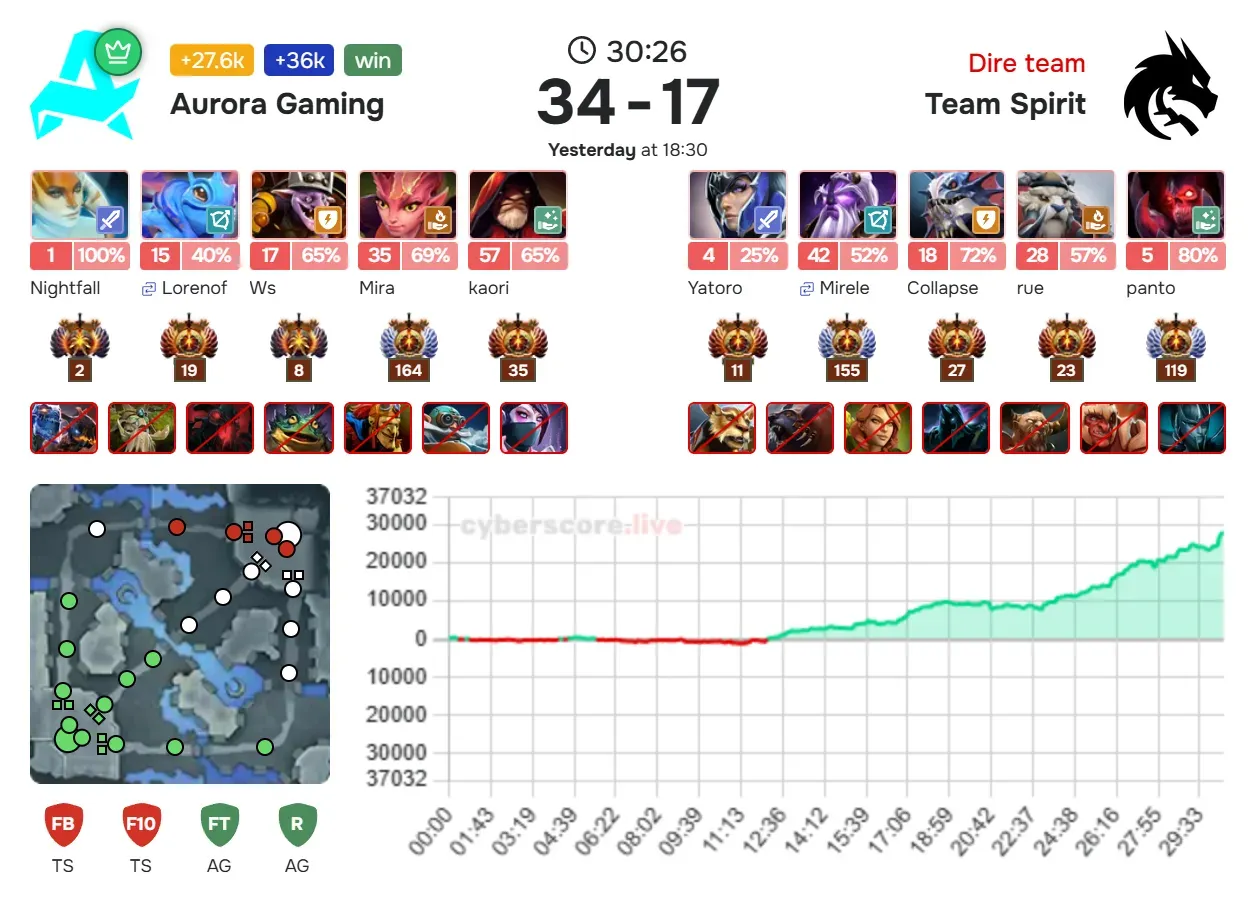
Game one set the tone for Aurora Gaming's aggressive approach. Team Spirit looked threatening early, with Aurora securing first blood at the five-minute mark. The match took a dramatic turn at ten minutes when Yatoro stood his ground against a gank attempt, trading his life for three Spirit kills through damage-over-time effects. Aurora recovered brilliantly, building a 9,000 gold lead by minute twenty before taking first barracks at 26 minutes. Nightfall recovered from his early death to dominate the networth charts, forcing Team Spirit to call GG at the 30-minute mark.
Team Spirit answered immediately in game two. Yatoro secured first blood and controlled the early game, with Spirit maintaining their advantage until the fifteen-minute mark when scores evened out. The decisive moment came at thirty minutes when Team Spirit won a crucial teamfight, but overconfidence proved costly. Yatoro died holding a Divine Rapier, creating an opening Aurora nearly capitalized on.
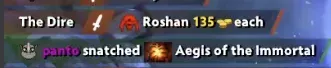
Spirit contested Roshan, stole the Aegis, and eliminated Aurora to secure the victory and level the series.
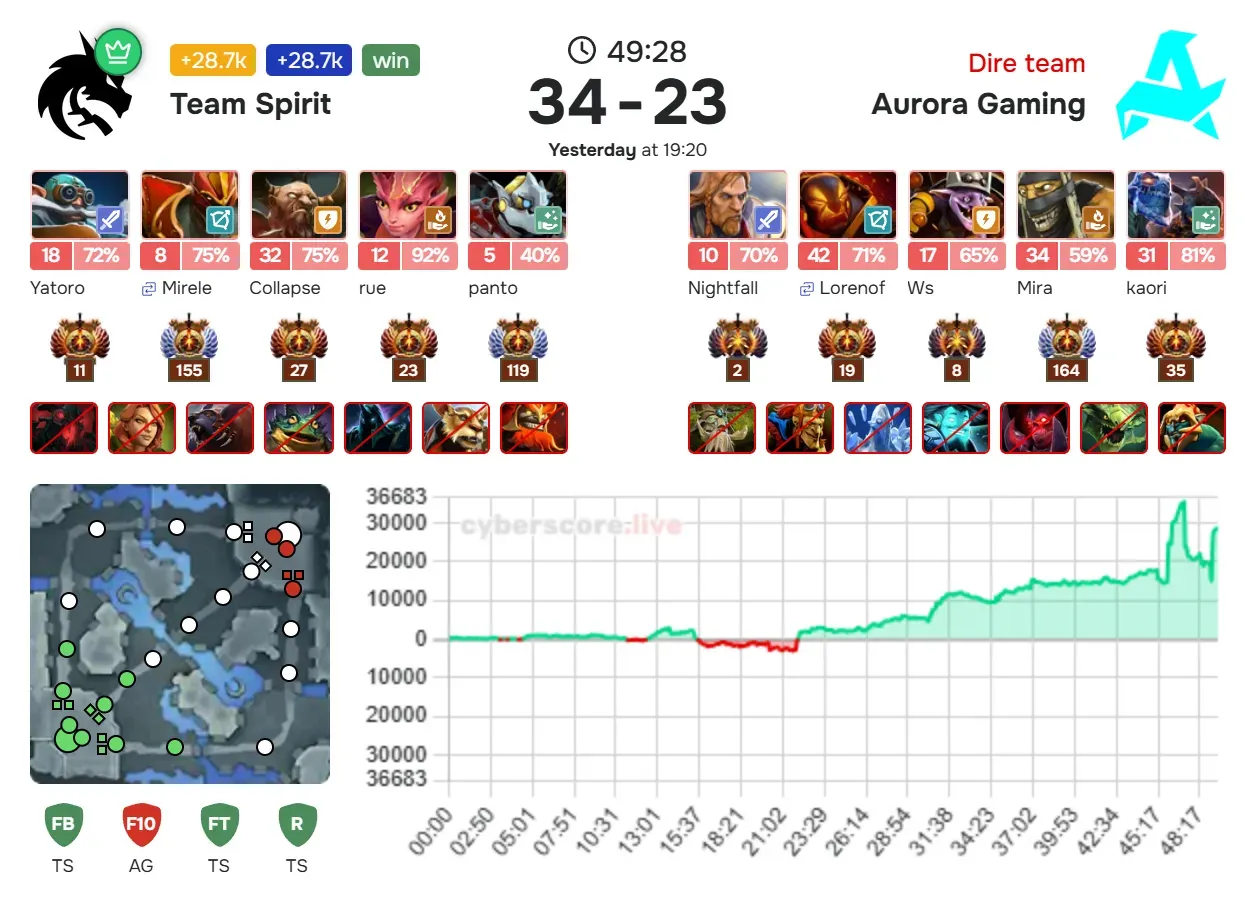
Game three belonged entirely to Team Spirit. They secured first blood at eleven minutes and spent the next thirteen minutes farming while dodging Aurora's gank attempts. At 24 minutes, Spirit executed a perfect smoke gank that eliminated Nightfall, Aurora's star carry. The momentum shift was immediate and decisive. Spirit snowballed their advantage into a commanding position, closing out game three at the forty-minute mark.
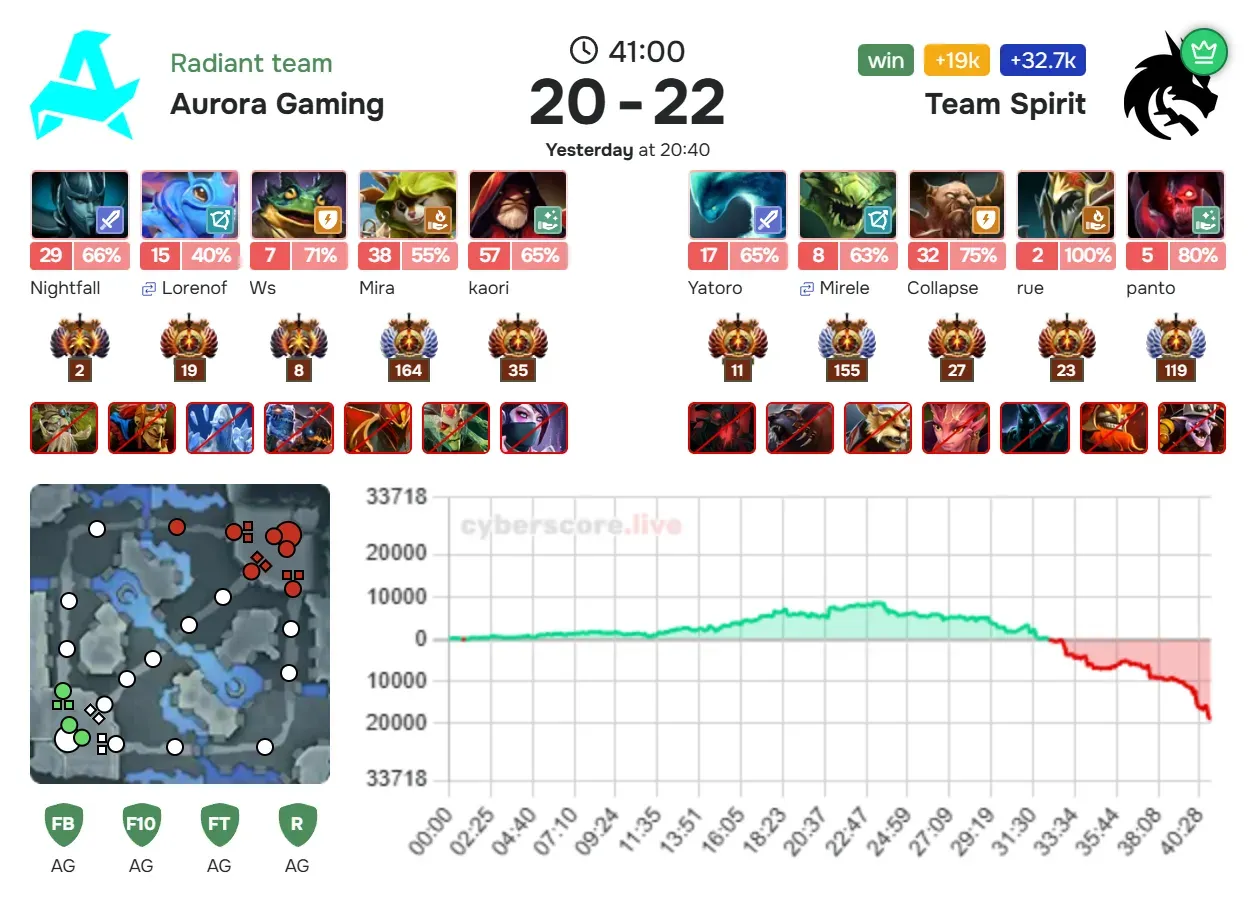
The series reached its peak intensity in game four. Both teams traded blows evenly through 35 minutes, with Aurora building an 8,000 gold lead despite nearly identical core networth between rosters. Failed engagements from Team Spirit allowed Aurora to gradually extend their advantage. The game showcased high-level Dota 2 where small mistakes compound into insurmountable deficits.
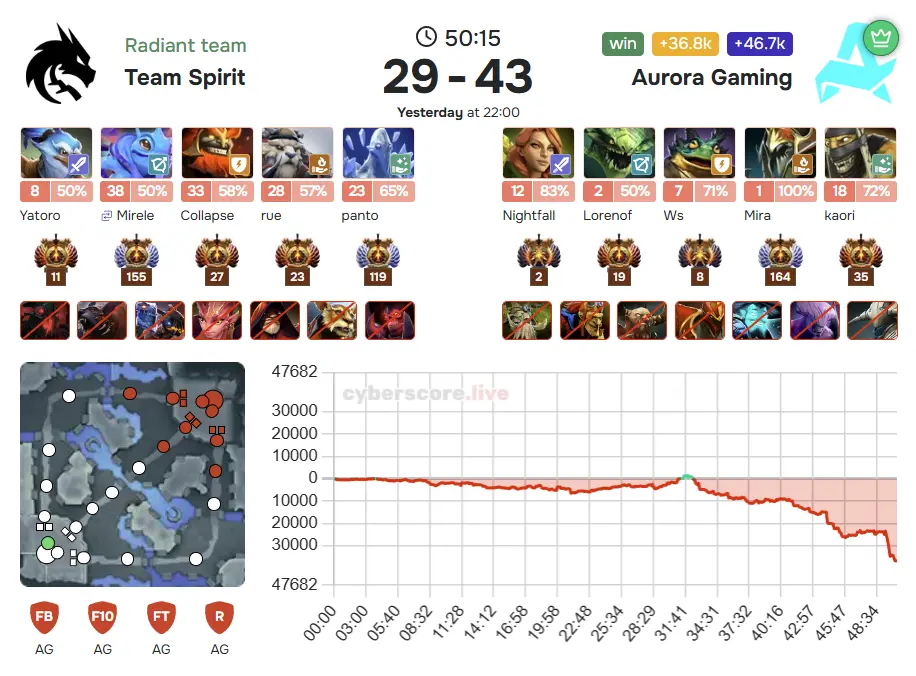
Game five removed all doubt about Aurora Gaming's championship credentials. They secured a 5,000 gold lead by twelve minutes and never relented. By 26 minutes, Aurora had amassed a staggering 20,000 gold advantage. Team Spirit found no answers to Aurora's systematic dismantling of their defensive positions. Aurora Gaming claimed both the decisive game and the tournament championship.
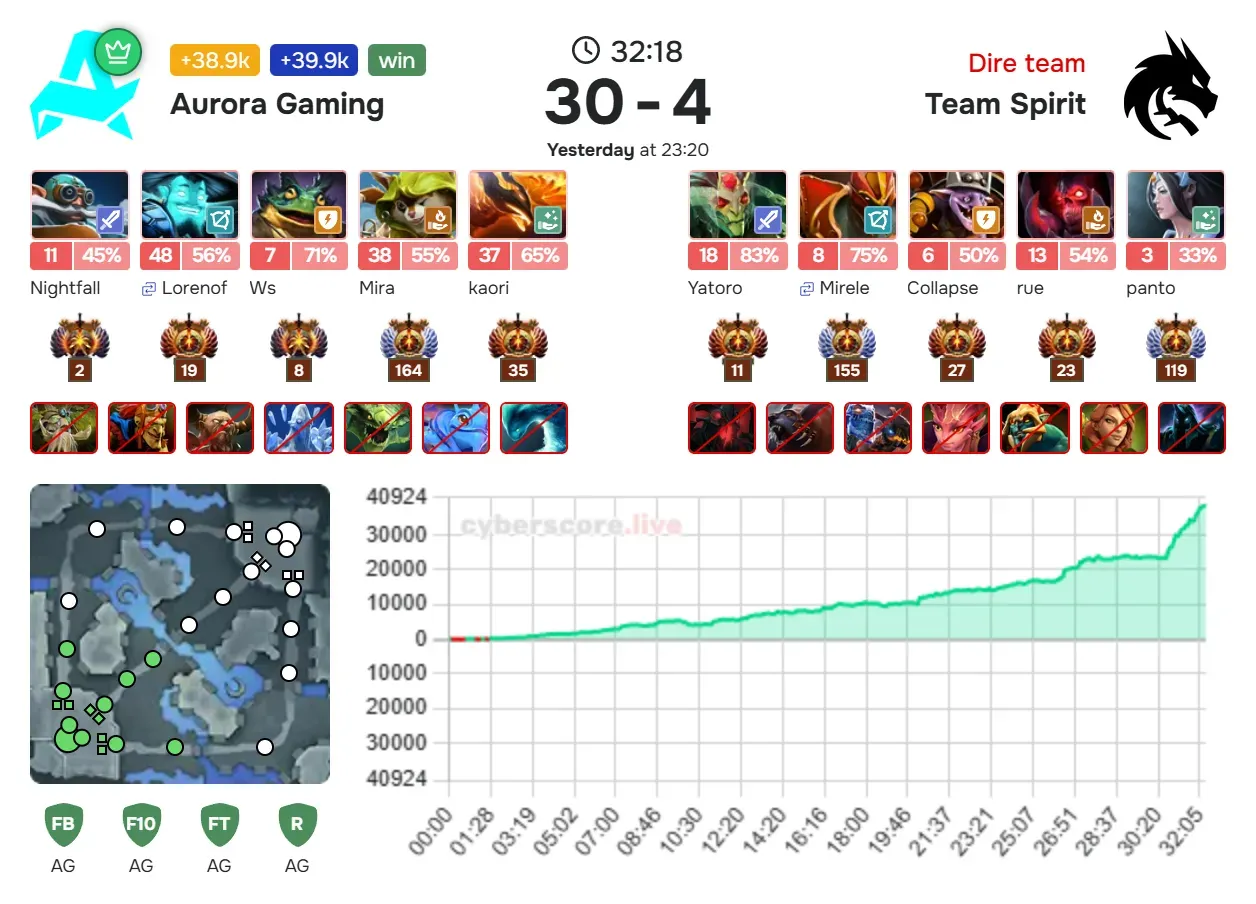
The hero selections throughout this series revealed current competitive priorities. Aurora Gaming's success with their core hero pool suggests certain picks have risen in the Dota 2 tier list following recent patches. Nightfall's carry performances demonstrated how farmed cores can still dominate games despite early setbacks, reinforcing the importance of scaling heroes in the current meta.
Team Spirit's game two Divine Rapier purchase showed the risks of high-variance itemization, even for elite teams. While Yatoro's aggressive item choices have defined his career, this series highlighted how one mistake can erase significant advantages. The hero matchups across all five games favored teams with strong late-game scaling, consistent with professional trends emphasizing secure farming patterns over early aggression.
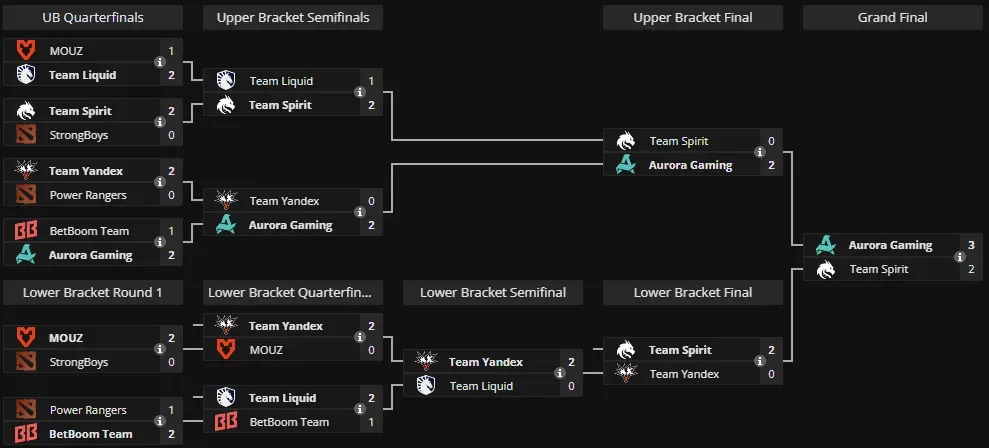
Aurora Gaming's championship run creates interesting narratives for upcoming tournaments. Their ability to overcome Team Spirit's reputation and recent form suggests they've solved the puzzle that many teams struggle with against the defending champions. This Grand Final performance establishes Aurora as legitimate contenders for future major events.
For readers tracking competitive Dota 2 through platforms like their preferred Dota 2 betting site, this series provided crucial data points. Aurora's methodical approach in elimination games, particularly their dominant game five performance, indicates a team that thrives under pressure. Team Spirit's inconsistency between games suggests vulnerability when opponents match their early game aggression, information that becomes valuable when evaluating future matchups involving either roster.
The FISSURE Universe series continues providing high-quality competitive Dota 2, with this Episode 8 Grand Final delivering everything fans expect from championship-level play. Both teams demonstrated why they're considered top-tier competitors, but Aurora Gaming's superior execution when it mattered most earned them the trophy.
Aurora Gaming will look to carry this momentum into upcoming tournaments, while Team Spirit must analyze what went wrong in games one and five. The Divine Rapier loss in game two, while ultimately not series-deciding, highlighted decision-making concerns that elite teams will exploit.
FISSURE Universe Episode 9 promises another showcase of competitive Dota 2, with both rosters likely returning to defend their reputations. Whether Aurora Gaming can maintain this form or Team Spirit reclaims their dominance remains the central question heading into the next event cycle.
ChaiViz
02.02.2026
Article TAGS
News Feed
Team Yandex and Aurora Gaming topped their respective groups at ESL One Birmingham 2026, with eight teams advancing to the playoffs and Indonesian mid laner Mikoto emerging as the tournament's standout performer from the preliminary stage.
Twenty-four teams, four groups, one shot at Paris glory. Here are our picks for the two sides that will escape each group at the Esports World Cup 2026.


Welcome to The Weekly Ward: Meme Vision, your weekly reconnaissance into the best Dota 2 community humor. Just like a well-placed ward reveals enemy movements, we're here to provide vision into the memes that defined the week.
Team Yandex swept through BLAST Slam VII to claim their third Tier 1 title of the season, defeating LGD Gaming 3-1 in a grand final that nobody saw coming from a team that almost didn't make the playoffs. Copenhagen delivered chaos, upsets, and a 111-minute instant classic before Yandex put their stamp on the pre-TI summer.
Team Liquid swept reigning TI champions Team Falcons 3-0 in the grand final of 1win Essence II, the last major Dota 2 event before The International 2026, delivering a massive momentum statement heading into the world championship.
BetBoom Team swept Aurora Gaming 3-0 in a grand final that stretched past 150 minutes of play, capping a PGL Wallachia Season 8 best remembered for the Swiss stage eliminations that removed both pre-tournament favorites before a single playoff match was played.
Tundra Esports are the ESL One Birmingham 2026 champions, claiming the $250,000 title with a 3-1 Grand Final victory over Team Yandex in front of a packed home crowd for British player Ari.

BetBoom overhauls its coaching staff and roster, Ace walks away from Team Liquid, and Virtus.pro's fallout claims another player as the post-TI 2026 shakeup enters its fourth week.
BLAST Slam VII brings twelve of the world's best Dota 2 teams to Copenhagen for $1,000,000 and a revamped format. Falcons, Team Liquid, PARIVISION, and Tundra Esports are our picks to lock up direct top-four finishes and skip the chaos of the Last Chance Qualifier.
Team Vision is chasing a perfect Swiss stage at The International 2026 while Nigma Galaxy stuns Iron Wing, Team Yandex hits its first real speed bump against Aurora, and LGD and Resilience deliver one of the longest three-game series in the tournament's history.