News Feed
Loading...
Loading...
Loading...
Loading...
Loading...
Loading...
Loading...
Loading...
Loading...
Loading...
News Feed
ChaiViz
05.01.2026
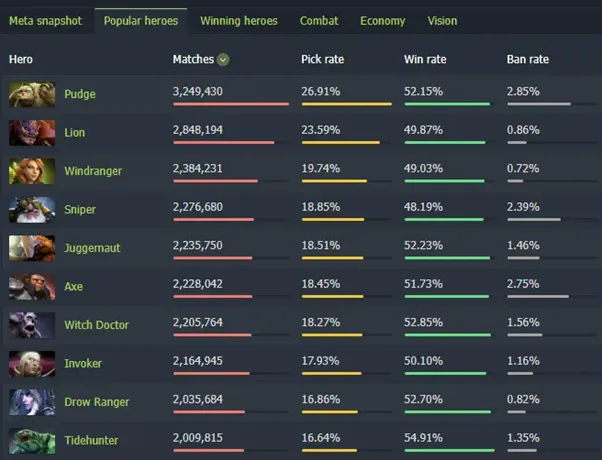
Pudge remains the most popular hero in Dota 2 with over 3.2 million matches played, but the current meta reveals something more interesting than raw pick rates. While the Hook master commands a 26.91% pick rate, his 52.15% win rate tells only half the story. The real winners of this patch are hiding in plain sight, and their success could reshape how professional teams approach upcoming tournaments.
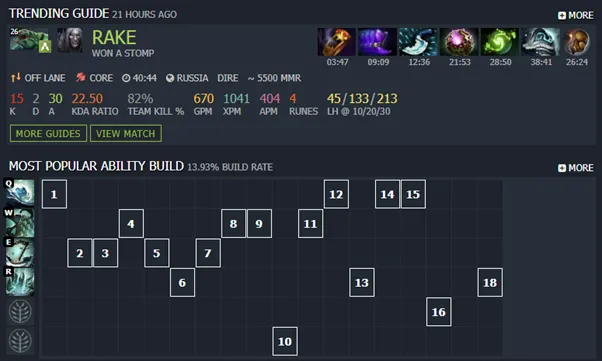
The current competitive landscape shows a fascinating divergence between popularity and effectiveness. Tidehunter leads the pack with a 54.91% win rate despite sitting at the lower end of pick rates among the top 10 heroes at 16.64%. This combination of strong performance and moderate popularity makes him a prime candidate for professional play, where teams seek advantages without revealing their entire strategy during the drafting phase.
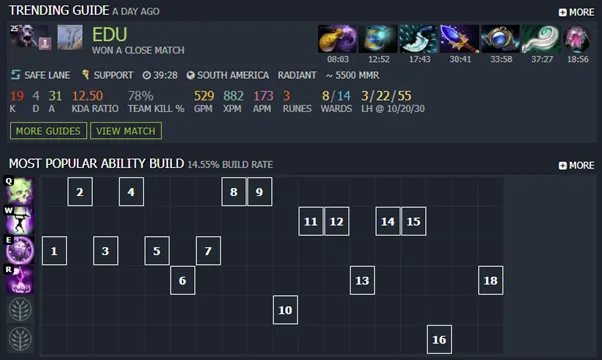
Witch Doctor presents another compelling case at 52.85% win rate with an 18.27% pick rate. The hero's ability to dominate team fights while requiring relatively modest farm makes him ideal for the fast-paced, objective-focused meta that defines current professional play. Expect to see significant Witch Doctor presence when teams need reliable crowd control and damage output without sacrificing early game pressure.
The mid-tier performers like Juggernaut (52.23% win rate) and Drow Ranger (52.70% win rate) occupy a sweet spot between accessibility and effectiveness. These heroes translate pub success into professional viability because their core mechanics reward both individual skill and team coordination. When upcoming Dota 2 tournaments begin, watch for teams to lean on these consistent performers during crucial elimination matches.
Lion's massive 2.8 million matches played with a 23.59% pick rate might suggest meta dominance, but his 49.87% win rate reveals a different reality. The support hero remains popular due to his straightforward kit and game-winning potential, but the statistics suggest players are either picking him into unfavorable matchups or failing to execute his high-impact abilities at critical moments.
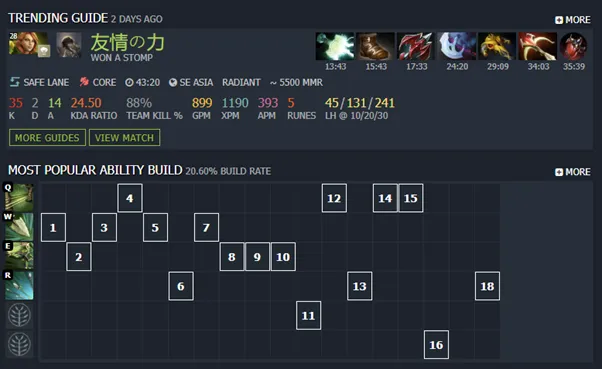
Windranger faces similar challenges with a 49.03% win rate despite 2.38 million matches. Her skill ceiling creates a gap between casual play and professional execution, meaning we'll likely see her reserved for specific players known for exceptional Windranger mechanics rather than as a general meta pick.

Sniper sits at 48.19% win rate while maintaining an 18.85% pick rate, indicating that while players enjoy the ranged carry's simple laning phase and team fight presence, the hero struggles against coordinated aggression. Professional teams with strong initiation tools will likely target Sniper drafts with early pressure strategies designed to shut down his farm.

Understanding these statistical trends becomes crucial when making tournament predictions. Heroes with win rates consistently above 52% deserve consideration when evaluating team drafts and match outcomes. If a team secures Tidehunter, Witch Doctor, and Drow Ranger in a single draft, the statistical foundation for success is already established before the game begins.
The meta snapshot also reveals ban rate patterns worth noting. Pudge draws a 2.85% ban rate while Axe sits at 2.75%, suggesting teams respect these heroes' game-changing potential even if their win rates don't dominate the charts. Professional drafters understand that certain heroes create too much chaos to leave available, regardless of overall statistics.
When evaluating options through any dota 2 betting site, these win rate patterns provide critical context for match predictions. Teams that consistently draft heroes with 52%+ win rates demonstrate statistical discipline that translates to better tournament performance. The Dota 2 tier list data shows clear patterns that smart prediction-makers can leverage for improved accuracy.
While these statistics paint the current picture, unconventional picks continue to emerge from unexpected sources. Topson's stream has become required viewing for anyone trying to anticipate meta shifts before they hit the main stage. The two-time International champion has a history of pioneering hero choices that initially seem bizarre before becoming tournament staples.
Keep close attention to Topson's hero experiments over the next few weeks. If he starts spamming an off-meta hero with consistent success, that's often a signal that professional teams are already testing similar strategies in scrims. By the time upcoming Dota 2 tournaments begin, what seems like a stream meme today could become a first-phase priority pick tomorrow.
The current meta snapshot demonstrates that Dota 2 remains remarkably balanced, with the top 10 heroes all maintaining pick rates above 16% and win rates clustered between 48% and 55%. This balance creates opportunities for creative drafting rather than forcing teams into rigid meta adherence.
As tournaments approach, teams will leverage these statistics differently based on their playstyles. Aggressive teams might prioritize Witch Doctor and Tidehunter for their team fight impact, while farming-oriented squads could lean on Drow Ranger's scaling potential. The heroes with the highest win rates don't always translate to professional success, but they provide a statistical foundation for prediction-making when combined with team-specific tendencies and player comfort picks.

The data suggests that the upcoming tournament meta will reward teams who can effectively combine popular comfort picks with statistically strong performers. Watch for drafts that balance crowd-pleasing heroes like Pudge and Invoker with the quiet performers like Tidehunter who consistently deliver wins. Those teams who master this balance will likely find themselves advancing deeper into brackets while others chase popularity over effectiveness.
ChaiViz
05.01.2026
Article TAGS