News Feed
Loading...
Loading...
Loading...
Loading...
Loading...
Loading...
Loading...
Loading...
Loading...
Loading...
News Feed
ChaiViz
01.10.2025
Valve dropped a bombshell into the Counter-Strike 2 economy on September 17, 2025, when the Genesis Terminal went live. This isn't just another case system variation; it represents a fundamental shift in how players acquire skins, make purchasing decisions, and interact with the Steam marketplace. The community response has been swift and divided, with early adopters learning expensive lessons about the new system's economic realities.
The Genesis Terminal arrives as part of your Weekly Drop pool, appearing alongside traditional cases and graffiti. When you receive a Sealed Terminal, you face an immediate choice: flip it on the Steam market for quick profit, or activate it to engage with its unique 72-hour decision window. That activation triggers a completely different acquisition mechanic than Counter-Strike players have experienced in over a decade.
Once activated, the Terminal provides access to a Trader who makes up to five distinct offers over 72 hours. Each offer presents a specific skin at a fixed Steam Wallet price. You can accept and purchase immediately, decline to see the next option, or let the timer expire if none of the five offerings appeal to you. The system introduces actual decision-making into skin acquisition, replacing pure random chance with curated choices and financial commitment.
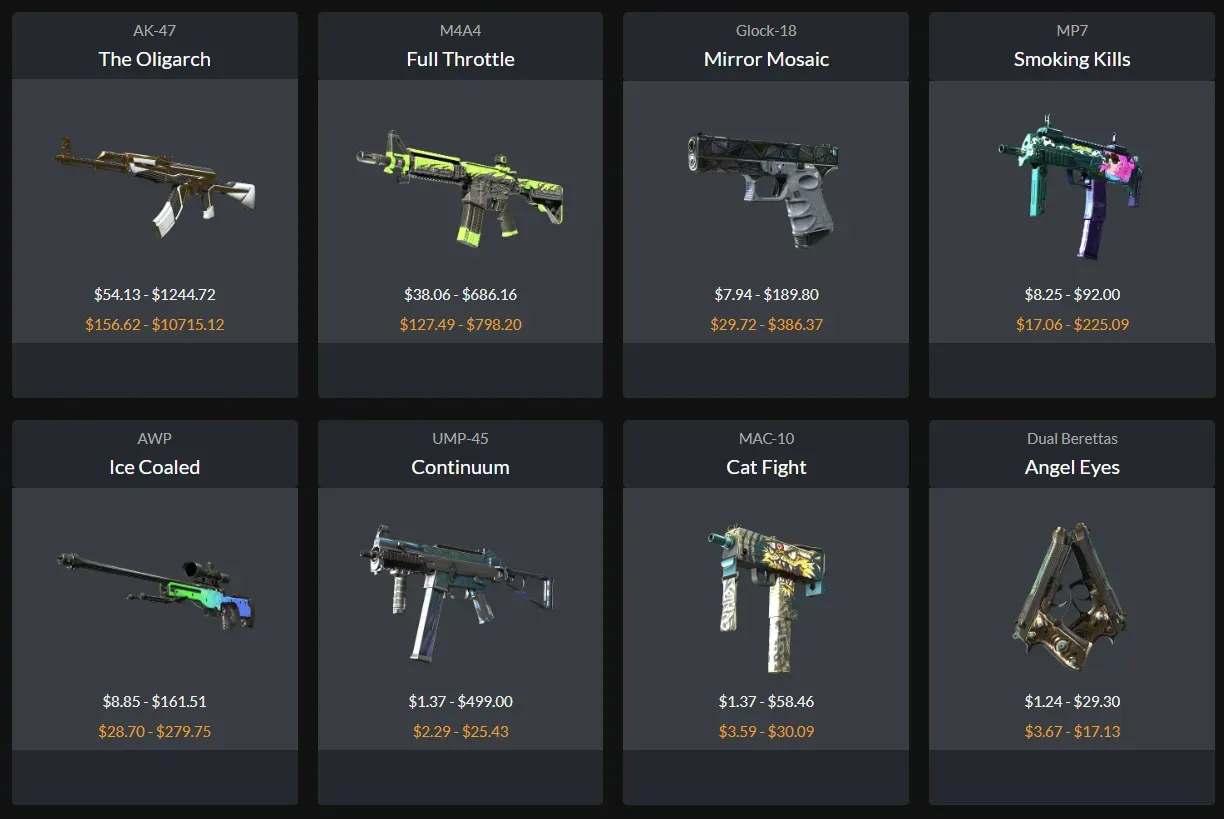
Several hard rules govern the Terminal's operation. All offers are randomly generated from the Terminal's collection, meaning you cannot request specific skins or rarities. The system explicitly excludes knives and gloves, keeping the highest-value items out of reach. Any skin purchased through the Terminal carries a seven-day trade restriction, preventing immediate market arbitrage. These constraints create a gambling mechanic with defined boundaries and limited upside potential.
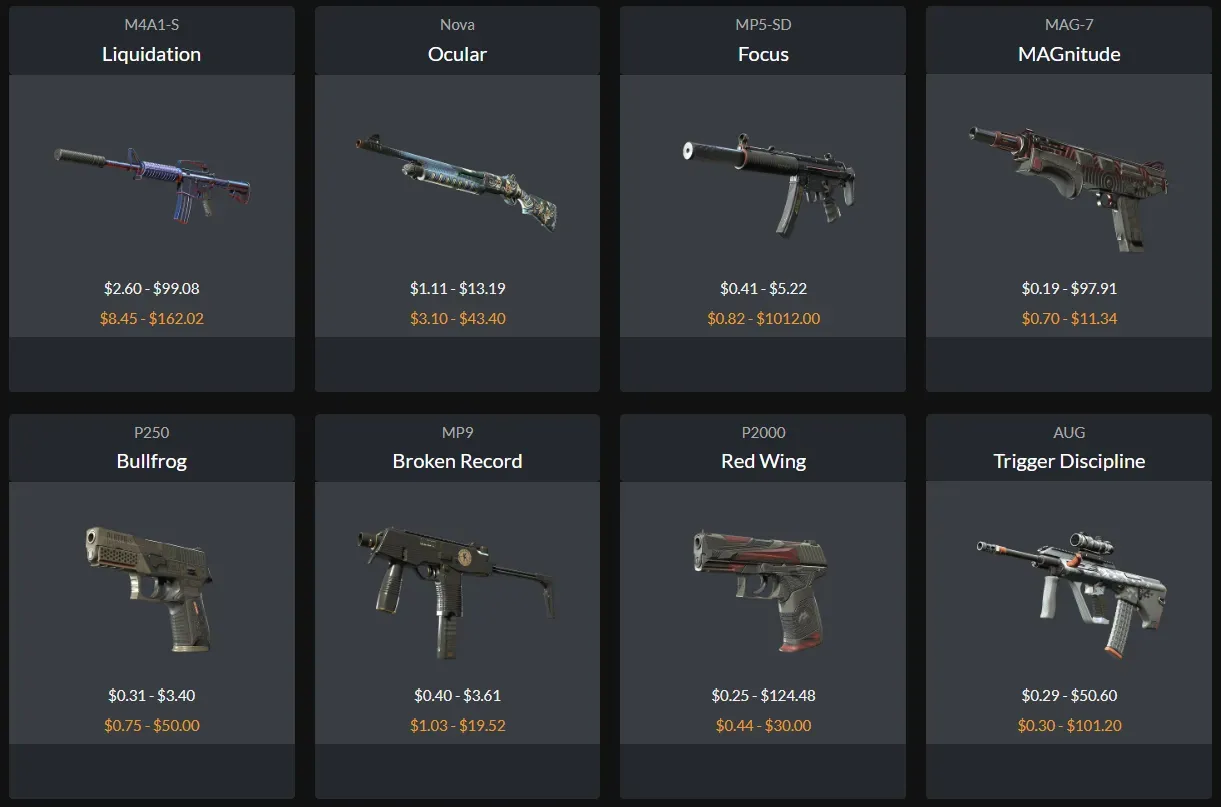
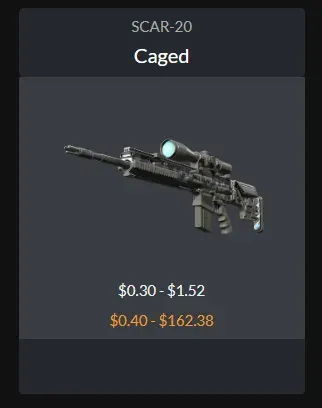
The collection itself features a curated selection of weapon finishes spanning multiple rarity tiers. Players familiar with cs2 weapon stats will recognize offerings ranging from Mil-Spec (purple) to Classified (pink) and Covert (red) rarities, with pricing that initially seemed reasonable compared to traditional case opening economics. However, early market behavior revealed a critical flaw in player expectations versus economic reality.
Early adopters quickly discovered that Terminal pricing doesn't account for immediate market conditions. Players paid $40-68 for Minimal Wear pink-tier skins through Terminal offers, only to watch Steam Community Market prices collapse below their purchase cost within days. Purple-tier items purchased for $5-10 suffered similar value erosion. The seven-day trade lock meant these early buyers couldn't liquidate positions before prices adjusted downward.
This value destruction stems from fundamental supply and demand mechanics. Traditional case openings create artificial scarcity through randomness and key costs. The Terminal, by contrast, allows targeted acquisition of specific items at fixed prices. When hundreds of players simultaneously unlock Terminals and receive offers for the same popular skins, market supply surges. Demand remains relatively static, so prices crash.
The community debate centers on whether this outcome represents a Valve money grab or simply market forces correcting. Long-time Counter-Strike economy participants argue that immediate profit from case openings hasn't been realistic since 2013. Holding items long-term or getting extremely lucky with rare drops has always been the path to positive returns. The Terminal doesn't fundamentally change this dynamic, it just makes the value proposition more transparent and immediate.
However, the Terminal's fixed pricing creates a psychological trap. When the Trader offers an AWP skin for $19 and you can see the same item listed on the market for $14, the decision becomes obvious. The problem emerges when you paid $19 three days earlier, before the market adjusted. You're locked into holding an underwater position while watching real-time value erosion. Traditional case openings hide this dynamic behind randomness and untradeable keys.
Smart Terminal usage requires different thinking than traditional case opening. Factory New pink-tier skins and any red-tier items maintain value better due to relative scarcity. Field-Tested and Minimal Wear items in lower rarities face the heaviest price pressure because the Terminal generates high supply in these categories.
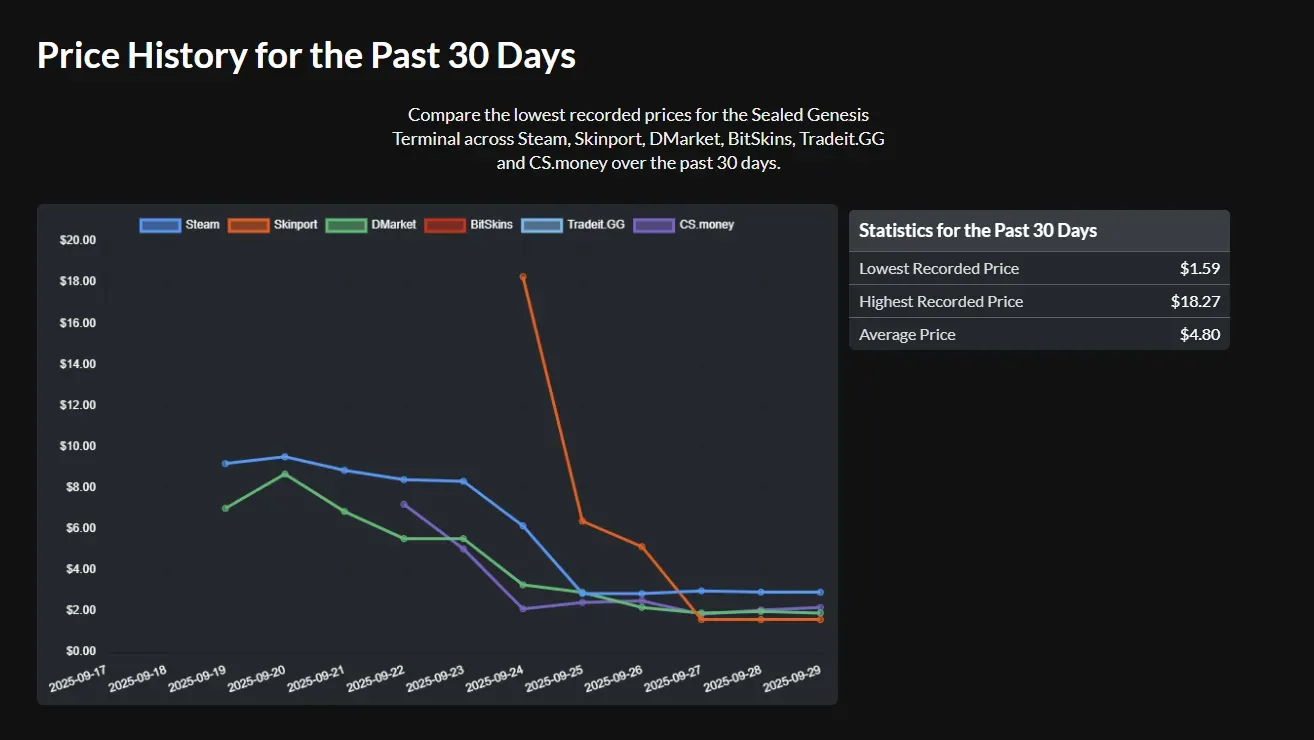
Players who received Terminals as drops rather than purchasing them captured pure profit regardless of skin values. The Terminal itself carried market value immediately after launch, and any skin acquired from a free drop represents positive return. This creates a two-tier system: free Terminal recipients win automatically, while Terminal purchasers face actual financial risk.
The seven-day trade restriction serves as Valve's mechanism to prevent rapid market arbitrage. Without this cooldown, savvy traders could exploit price differentials between Terminal offers and market listings. The restriction forces actual consumption decisions rather than pure profit-seeking behavior. You must genuinely want the skin for personal use or commit to holding it as a speculative position.
Counter-Strike's skin economy has always featured market saturation for mid-tier items. The top one percent of skins maintain value through genuine scarcity and desirability. The Terminal didn't change this hierarchy, it simply provided another acquisition path that reveals the true value dynamics more clearly than randomized case openings.
Valve faces a balancing decision regarding Terminal offer pricing. If market values consistently sit below Terminal prices, the system becomes purely a value trap for uninformed players. Reducing Terminal offer prices to match market realities would acknowledge the system's impact on supply. Alternatively, Valve could adjust the Terminal's drop rate or modify which skins appear in offers to better manage supply.
The community's split reaction reveals different player mindsets. Some view the Terminal as a transparent way to acquire specific skins without pure gambling. Others see it as a predatory system that tricks players into overpaying for items they could purchase cheaper on the market. Both perspectives contain truth depending on timing, luck with offers, and individual financial positions.
For players considering Terminal engagement going forward, the strategy becomes clear. Research current market prices before accepting any offer. Compare the Terminal price against Steam Community Market listings and factor in the seven-day trade lock. Only accept offers that provide genuine value or feature skins you want for personal use regardless of investment return. Treat the Terminal as a curated shopping experience rather than a profit opportunity.
The Genesis Terminal represents Valve's latest evolution of Counter-Strike's monetization ecosystem. Whether it succeeds long-term depends on price adjustments, community acceptance, and how effectively it coexists with traditional case openings. Early market chaos was inevitable as players learned the new system's economics through expensive trial and error. The coming months will reveal whether the Terminal becomes a valued acquisition method or a cautionary tale about disrupting established virtual economies.
ChaiViz
01.10.2025
Article TAGS