IEM Krakow was a harsh test for Pick’ems players. With a compressed playoff bracket and a +1 correct, -1 incorrect scoring system, every late-stage decision carried disproportionate weight. There was little room to recover from a missed finalist or champion call, especially once the tournament moved into best-of-five territory.
GoCore approached the event with a conservative backbone. The goal was not to chase every upset, but to maximize consistency across stages and protect against volatility. In practice, that philosophy produced strong returns through most of the tournament, before being stress-tested in the grand final.
Where GoCore’s Pick’ems strategy worked at IEM Krakow
Vitality were correctly identified as the primary structural anchor of the event. From the opening group stage matches against BC.Game and 3DMAX, Vitality showed exactly what GoCore expected. Clean 2-0 wins, strong CT sides, and minimal round giveaways established them as one of the safest advancement picks on the board.
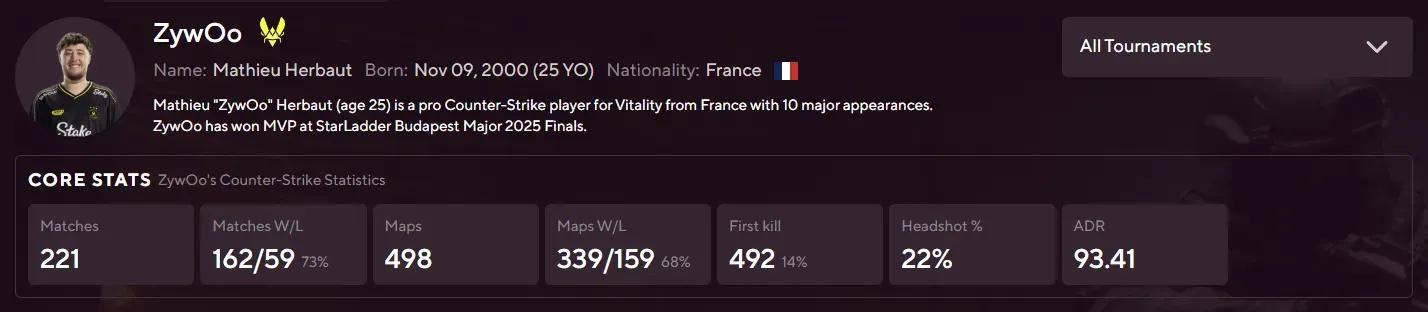
That read only strengthened as the tournament progressed. The quadruple-overtime test against Aurora on Ancient did not expose cracks, but rather confirmed Vitality’s resilience under pressure. For Pick’ems purposes, surviving that match without collapsing preserved value at a stage where many teams hemorrhaged points.
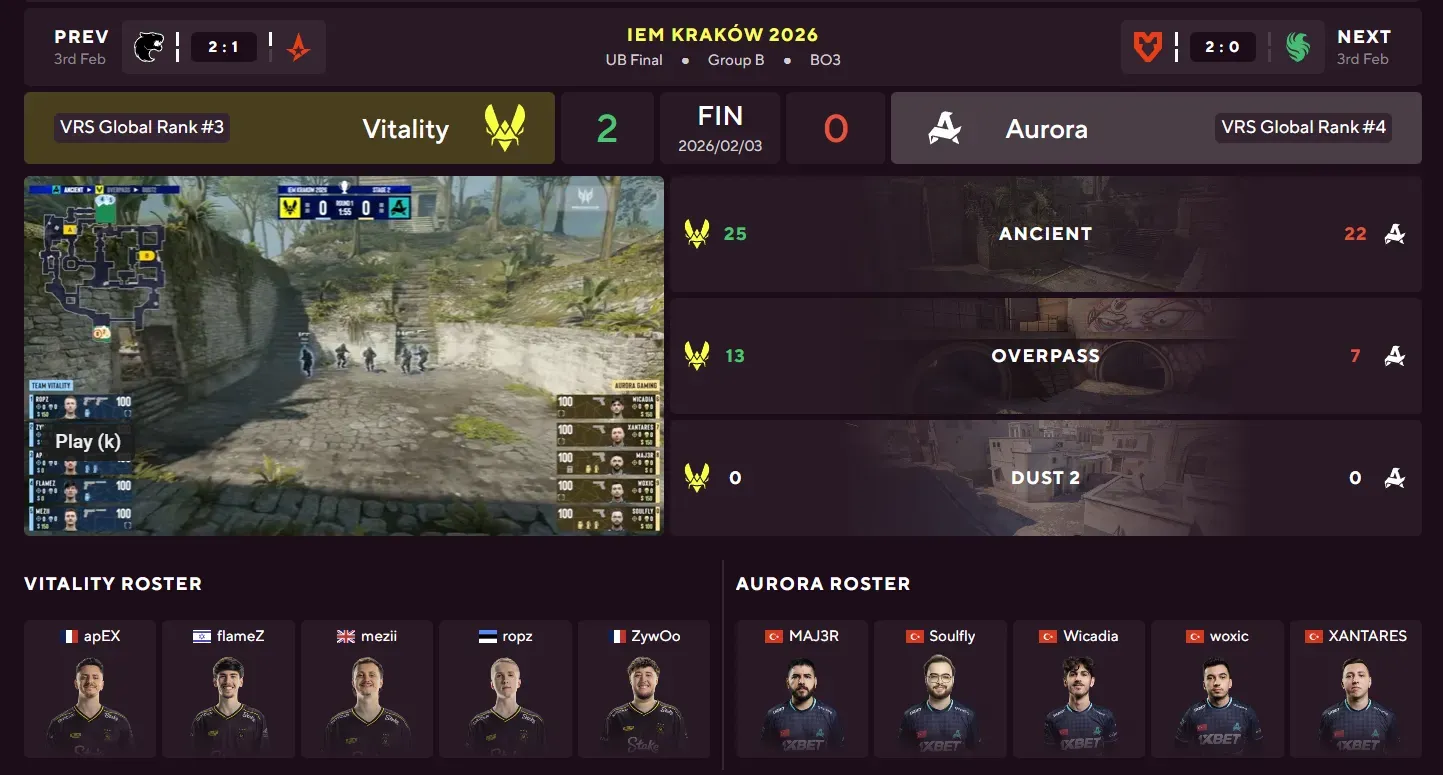
ZywOo was the clearest correct call of the entire event. His performance against FURIA in the final reflected what GoCore banked on from the start. A 1.66 rating across four maps, 101 ADR, and relentless multi-kill output gave Vitality a stable superstar floor with championship-winning upside. For Pick’ems players, this was the ideal profile. High impact without reliance on variance-heavy rounds.
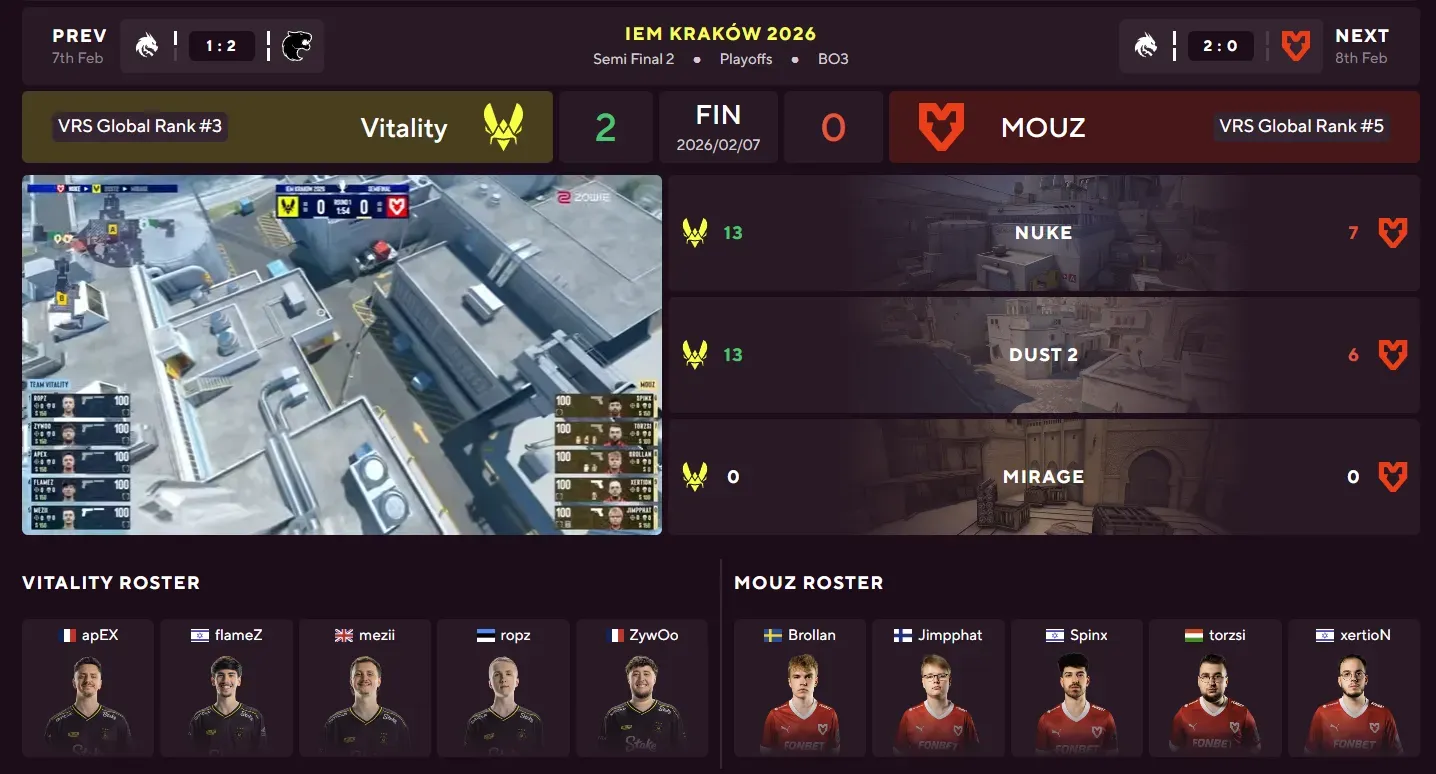
Gocore’s confidence in Vitality also paid off in the semi-final against MOUZ. The 2-0 win on Nuke and Dust2 highlighted a recurring Pick’ems theme. Vitality punish mistakes harder than almost any other team. MOUZ lost multiple rounds to full ecos and squandered man-advantage situations, exactly the kind of scenarios that stable teams convert into guaranteed points.
Why FURIA were correctly labeled as volatile
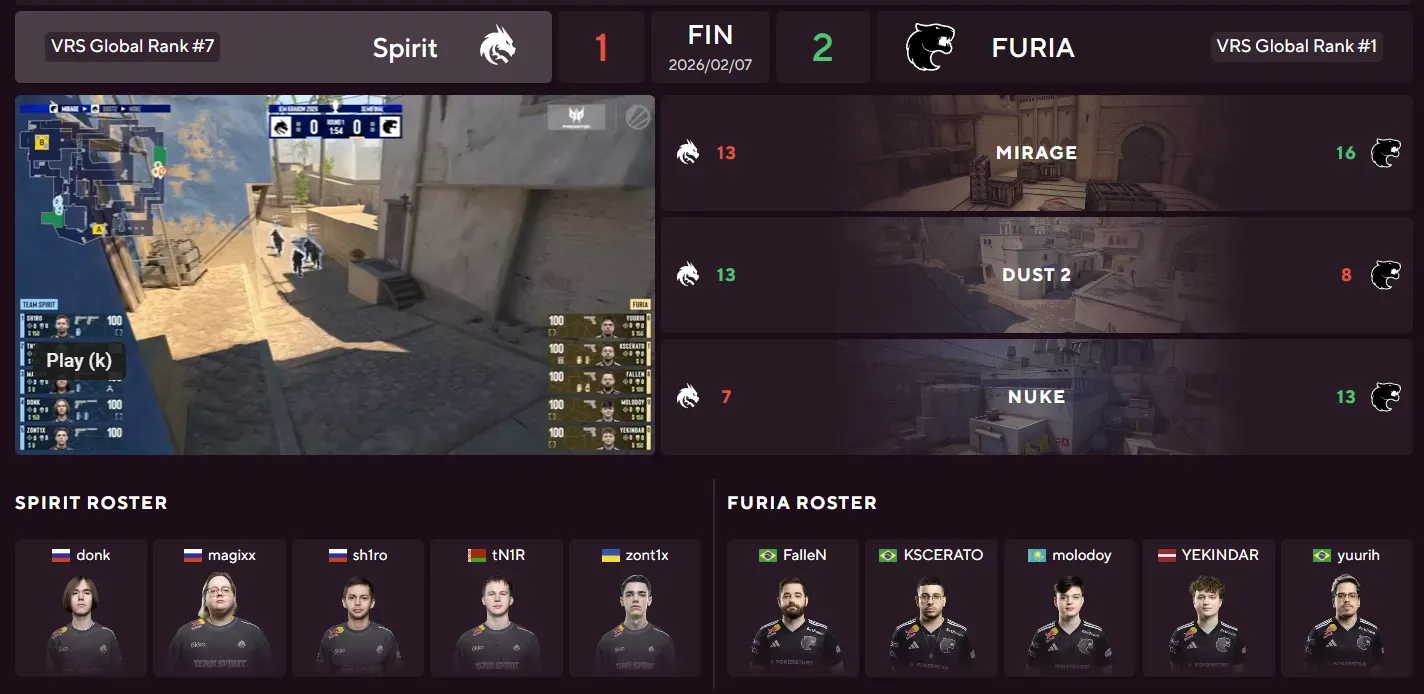
FURIA’s run to the grand final reinforced Gocore’s classification of them as a high-variance Pick’ems team. Their semi-final win over Spirit was driven by explosive individual performances, particularly from molodoy on Mirage and Nuke. The Kazakhstani AWPer delivered the type of ceiling games that can swing single matches but are difficult to project consistently.
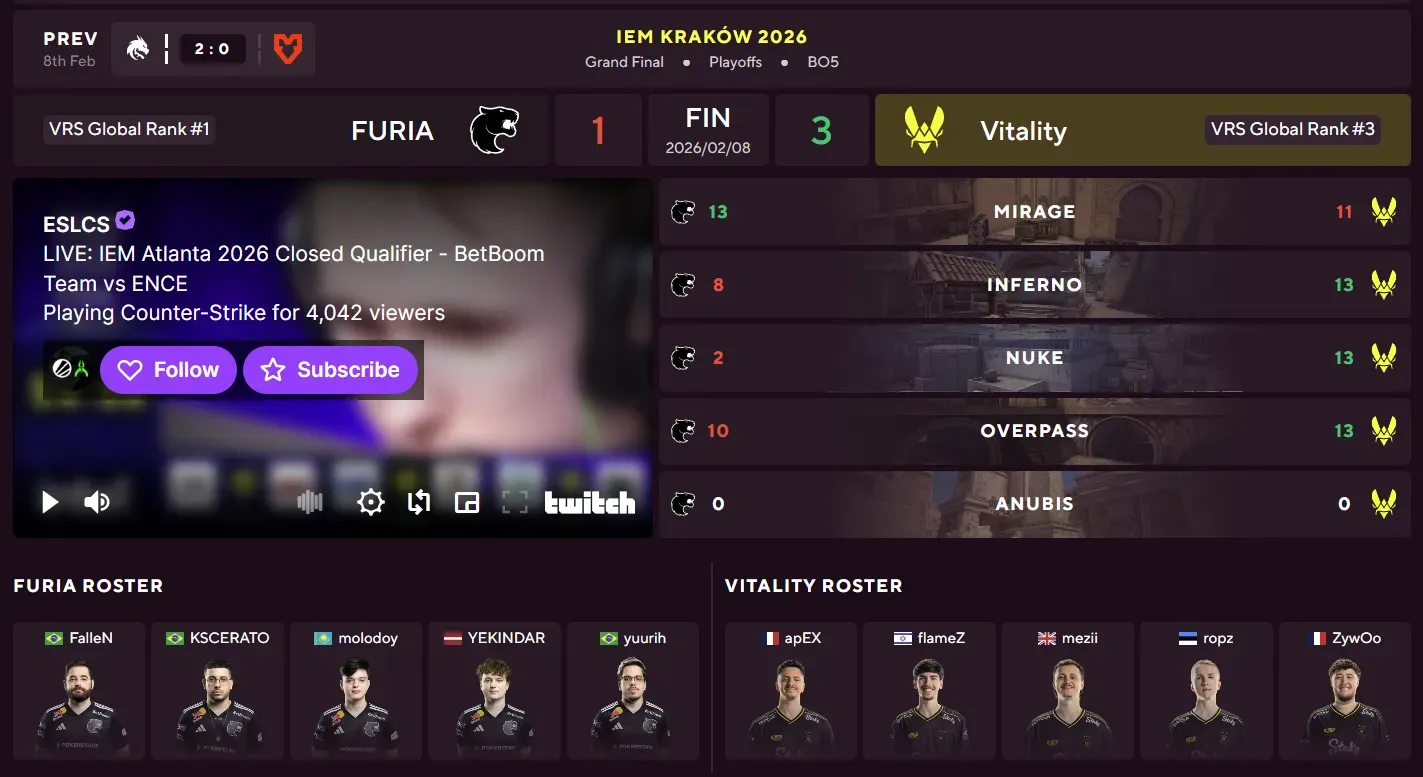
That volatility carried into the grand final. Mirage, FURIA’s pick, was won through a dramatic CT-side comeback after a disastrous first half. YEKINDAR’s recovery and molodoy’s late clutch turned a losing map into a statement win. From a Pick’ems perspective, this was the upside scenario FURIA backers were chasing.
The problem was sustainability.
Once the series moved beyond Mirage, FURIA’s volatility worked against them. Inferno slipped away through a lack of streak control. Nuke collapsed entirely despite an eight-map win streak coming in. Overpass briefly stabilized before Vitality’s structure reasserted itself. For GoCore’s model, this confirmed the original read. FURIA can spike. They struggle to close.
Where Gocore’s Pick’ems fell short
The primary miss at IEM Krakow was not failing to rate Vitality highly. It was underestimating just how decisive the gap would be in the final once Vitality stabilized.
Gocore anticipated a competitive championship series shaped by map trading and mid-round battles. Mirage reinforced that expectation. The reality after that map did not.
Inferno, Nuke, and Overpass were increasingly one-sided. Vitality’s CT sides suffocated FURIA’s offense, and once momentum shifted, the Brazilian side could not regain footing. Nuke in particular became a breaking point, with Vitality winning nine straight CT rounds and erasing FURIA’s confidence entirely.
In Pick’ems terms, the lesson is blunt. Correctly identifying the champion is often not enough. Understanding whether the final will be contested or dominant matters for confidence in late-stage leverage picks.
What IEM Krakow reinforced for Pick’ems players
First, anchors still win tournaments. Vitality and ZywOo delivered consistent value at every stage. Cards built without them were exposed quickly.
Second, volatility needs boundaries. FURIA rewarded players who took controlled risks. Overcommitting to them as a championship pick proved costly.

Third, finals reward ceiling layered on top of structure. Vitality did not abandon discipline to win Krakow. They paired it with elite individual output. That combination remains the hardest profile to fade.
For GoCore, Krakow was not a failure of philosophy. It was a reminder that even optimal strategies must account for moments where one player performs at a level that breaks all assumptions.
ZywOo did exactly that.
TL;DR
- Gocore correctly anchored Pick’ems around Vitality and ZywOo
- Vitality’s consistency paid off across every stage
- FURIA were accurately classified as high-variance
- The grand final exposed the gap once Vitality stabilized
- Krakow reinforced structure plus ceiling as the winning formula
Article TAGS
CS2
Pick’ems
IEM Krakow 2026
ZywOo
Vitality
News Feed
Loading...
Loading...
Loading...
Loading...
Loading...
Loading...
Loading...
Loading...
Loading...
Loading...