Dota 2 is not a static game. It never has been. Since 2016, it has been reshaped by dozens of major patches, expanded by a wave of new heroes, dressed up with some of the most coveted cosmetics in esports, and taken its biggest annual event to stages across three continents. Keeping track of all of it is its own challenge.
This is the first part of a two-part look at the game's journey since 2016, using that year as a starting point for a reason that will become clear by the end. For now, the focus is on the numbers, the characters, and the venues that have defined nearly a decade of competitive Dota 2. The second part will bring all of this into sharper focus with a closer look at the competitive landscape and what is at stake when the world's best teams descend on China next year.
Patches: The Numbers Behind the Changes
Between 2016 and 2025, Valve released a total of 44 major patches for Dota 2. That number alone tells a story, but the year-by-year breakdown tells an even more interesting one.
2016 saw five patches (6.86 through 7.01), with that final patch marking the game's transition into the 7.00 era, arguably the most significant version shift in the game's history. 2017 followed with six patches. Then came 2018, which stands as the most active single year in terms of patch frequency by a considerable margin: 13 patches released across that calendar year, from 7.08 all the way to 7.20.
After that intensity, the pace slowed noticeably. 2019 brought three patches, 2020 brought five, and 2021 and 2022 each saw just two. 2023 returned to three patches, 2024 had two, and 2025 added three more to the total.
What this distribution reflects is a game that went through a phase of rapid, sometimes chaotic iteration before settling into a more deliberate and measured update cycle. The 2018 spike coincides with a period in which Valve was experimenting aggressively with the game's mechanics and economy systems. The quieter years that followed suggest a development philosophy that prioritised stability and refinement over constant disruption.
New Heroes: Sixteen Additions to the Roster
Since 2016, Dota 2 has introduced sixteen new playable heroes. In order of release, they are Underlord, Monkey King, Pangolier, Dark Willow, Grimstroke, Mars, Void Spirit, Snapfire, Hoodwink, Dawnbreaker, Marci, Primal Beast, Muerta, Ringmaster, Kez, and Largo.
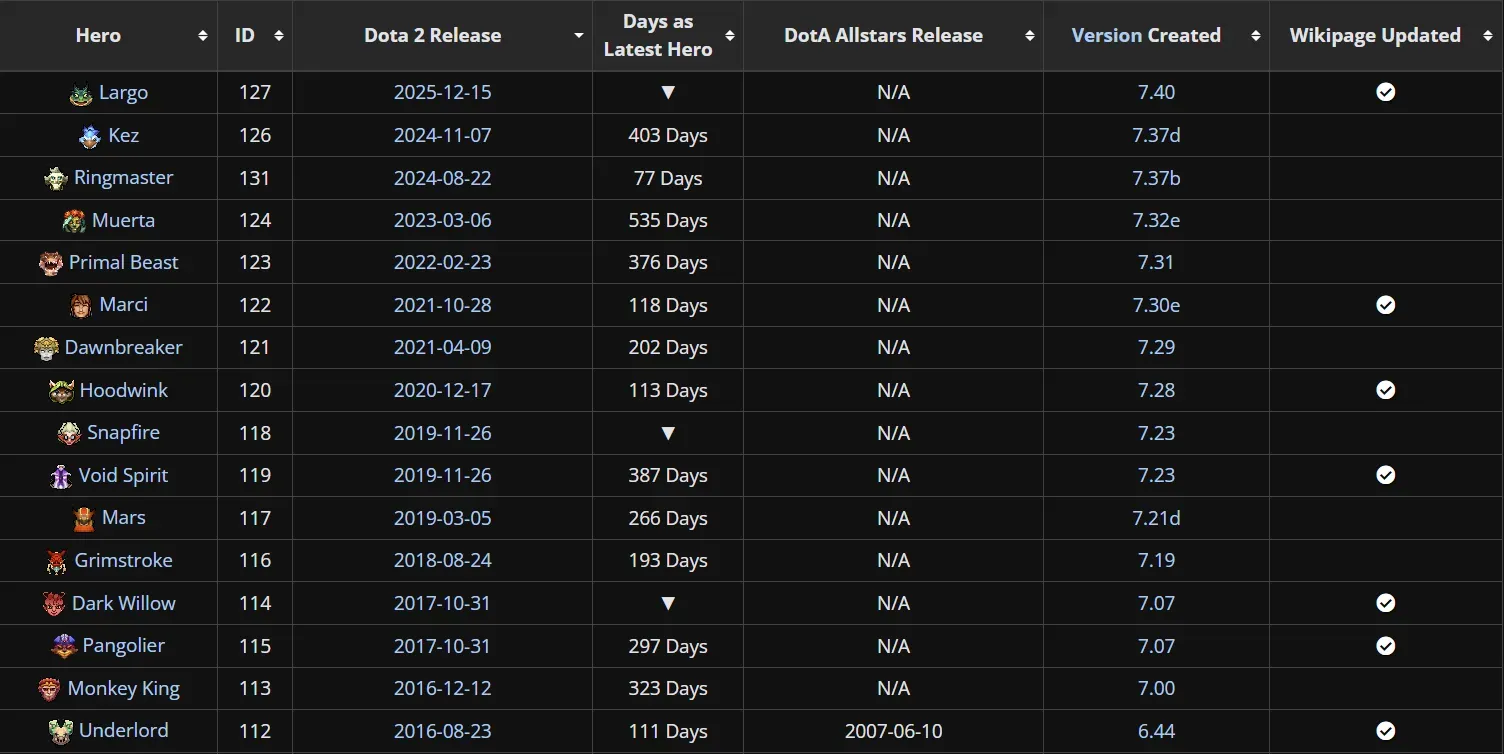
Sixteen heroes across nearly a decade is not an enormous number by genre standards, but Dota 2 has never competed on volume. Each addition to the roster carries mechanical weight and tends to shift the competitive meta in meaningful ways. The heroes released during this period span a broad range of roles and playstyles, reflecting a design philosophy aimed at adding complexity and character to a pool that already numbered well over a hundred.
Arcana Sets: When Cosmetics Became Events
Alongside the patches and hero releases, Valve's Arcana cosmetic sets have become cultural touchstones within the Dota 2 community. These are the highest-tier cosmetic items in the game, and their releases have frequently been tied to major events or community votes. Since 2016, sixteen Arcana sets have been released:
Monkey King received the Great Sage's Reckoning in 2016.

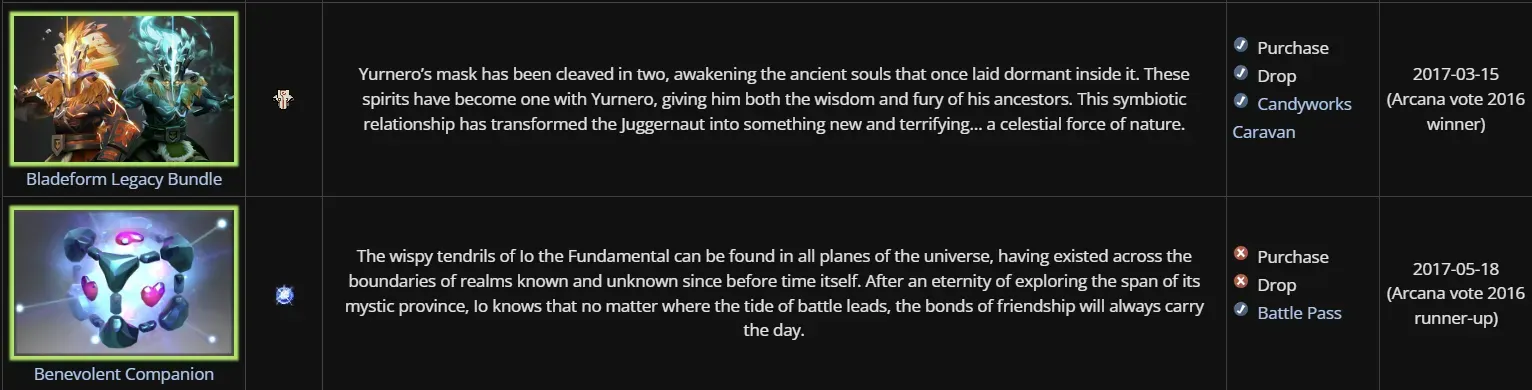
Juggernaut followed with Bladeform Legacy in 2017, alongside Io's Benevolent Companion.
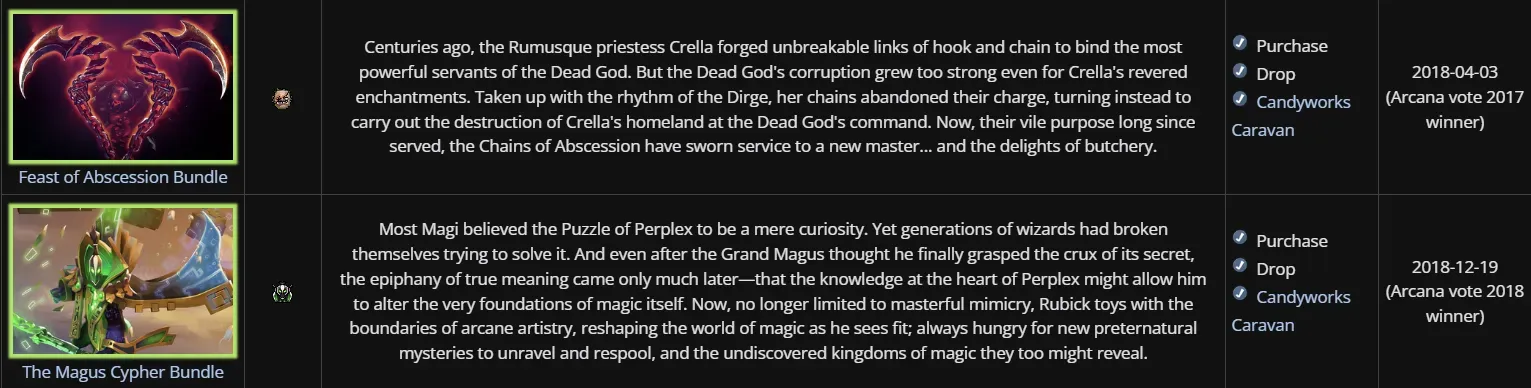
2018 brought two more: Pudge's Feast of Abscession and Rubick's The Magus Cypher.
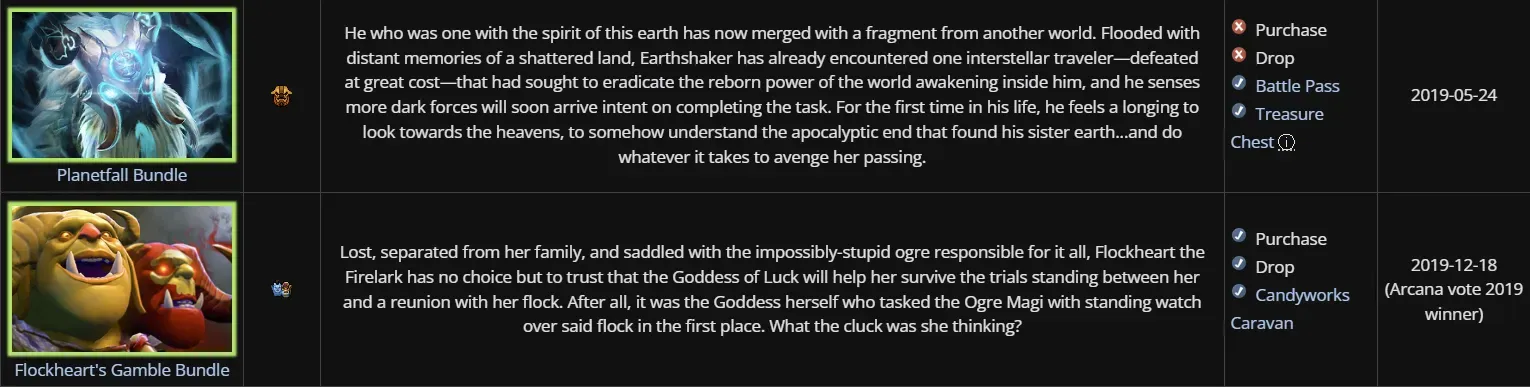
Earthshaker's Planetfall and Ogre Magi's Flockheart's Gamble arrived in 2019.
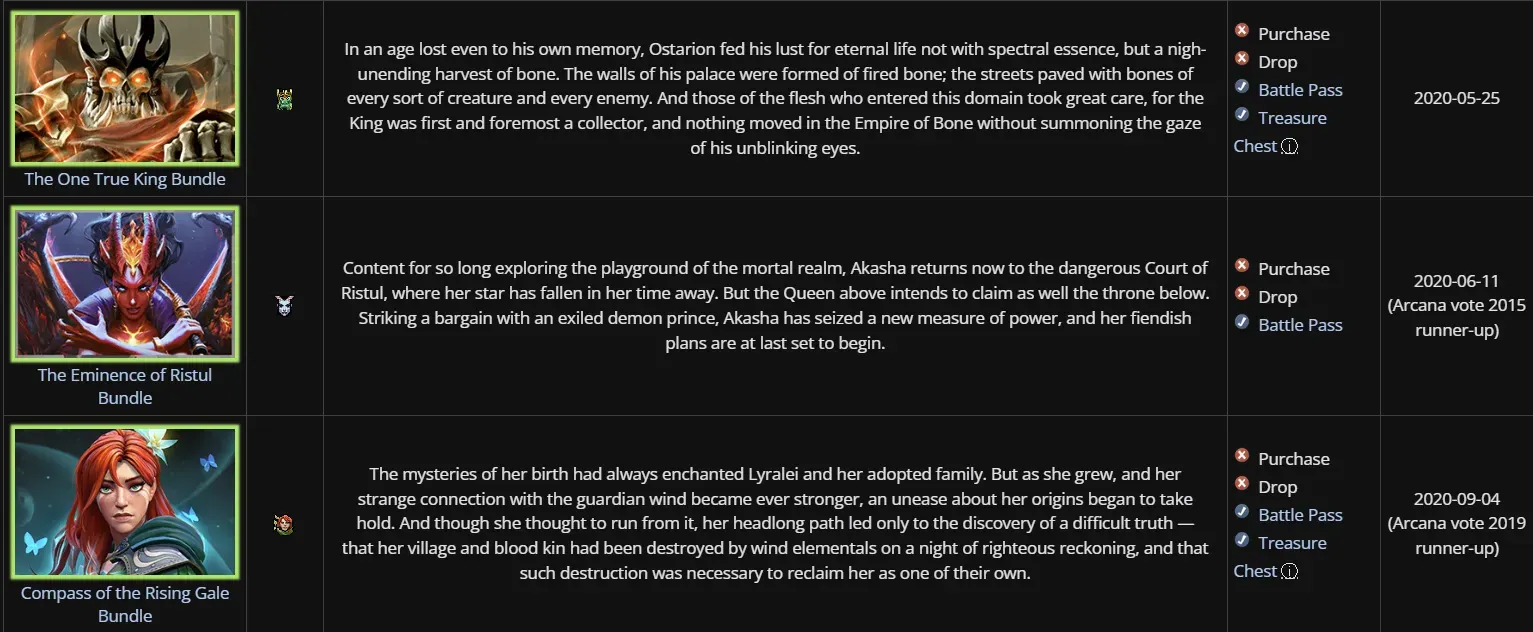
The year 2020 was the most productive for Arcana releases in this period, with three: Wraith King's The One True King, Queen of Pain's The Eminence of Ristul, and Windranger's Compass of the Rising Gale.
2021 delivered Spectre's Phantom Advent and Drow Ranger's Dread Retribution.
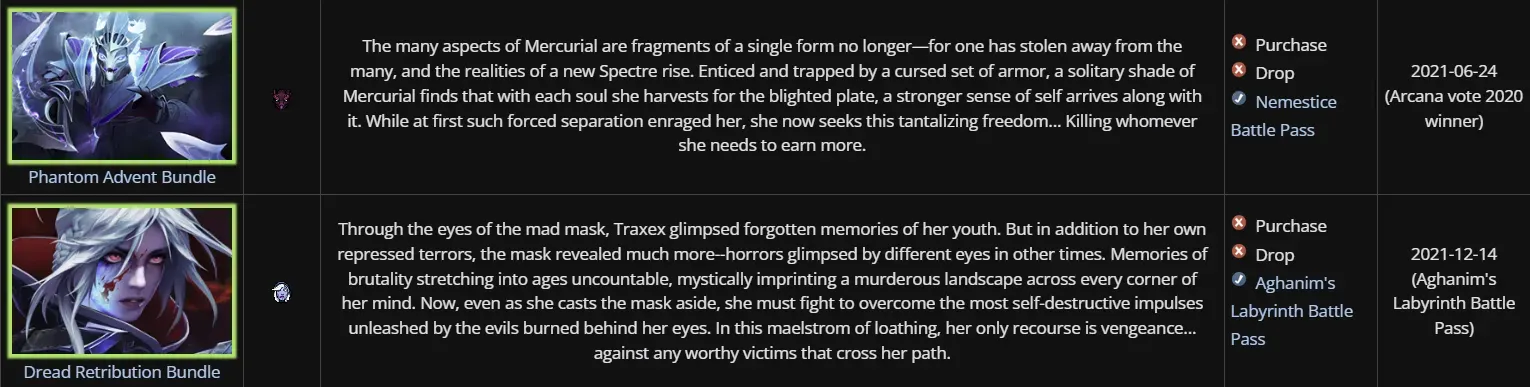
Then 2022 added Faceless Void's Claszian Apostasy and Razor's Voidstorm Asylum.
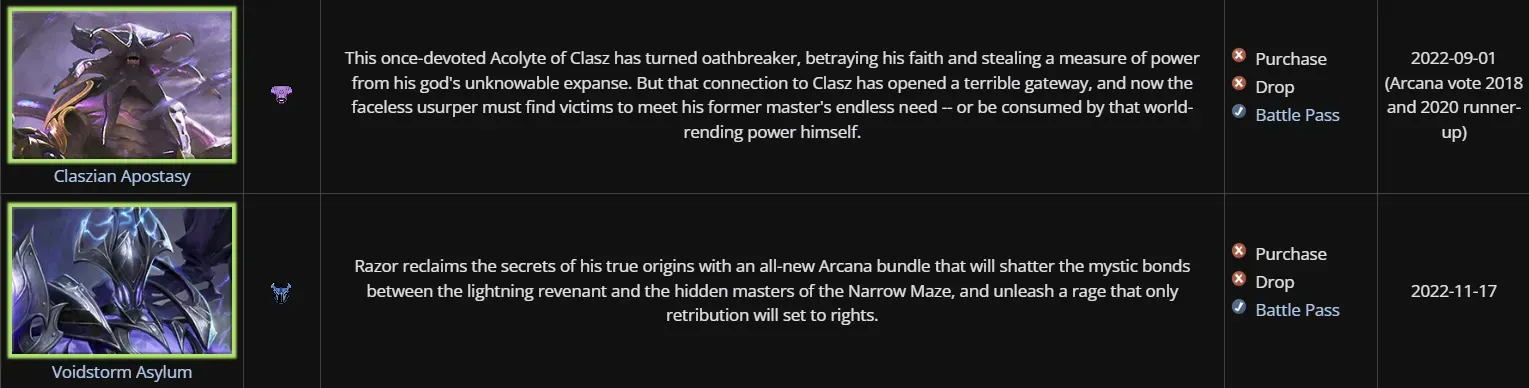
After a gap in 2023, 2024 returned with two Arcanas tied to the Crownfall event: Vengeful Spirit's The Resurrection of Shen and Skywrath Mage's The Devotions of Dragonus.
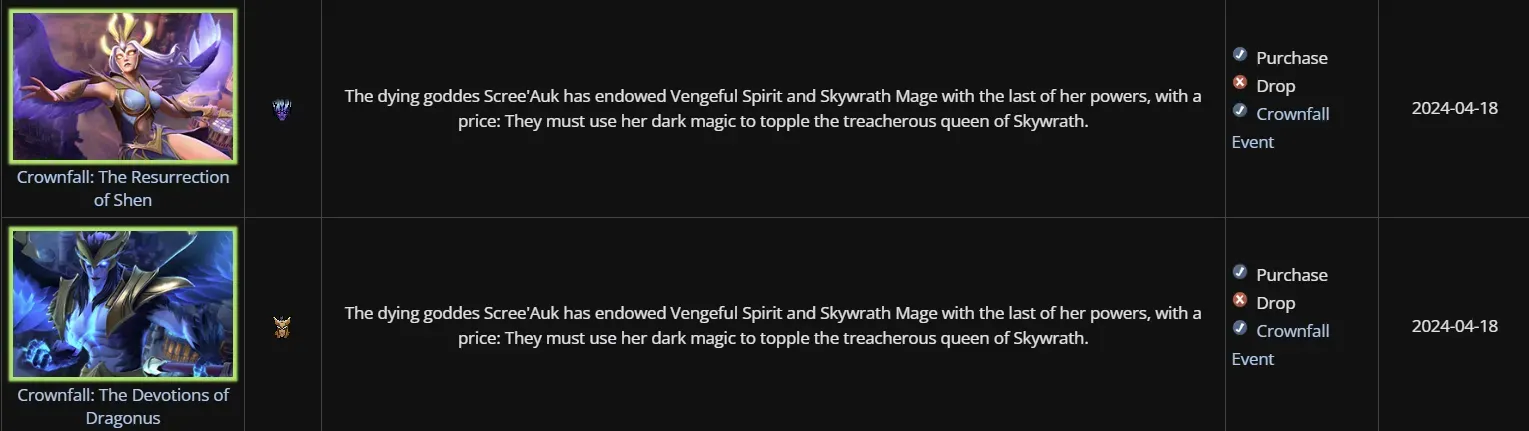
The Arcana releases paint a picture of a community-game relationship that has evolved considerably, with cosmetics functioning less as simple purchases and more as shared milestones that the community experiences together.
Clinkz: The Most Reworked Hero in Recent Memory
If one hero symbolises Dota 2's willingness to completely reimagine its own designs, it is Clinkz. The hero has been overhauled multiple times, with several of his core abilities changing beyond recognition across different patch eras.
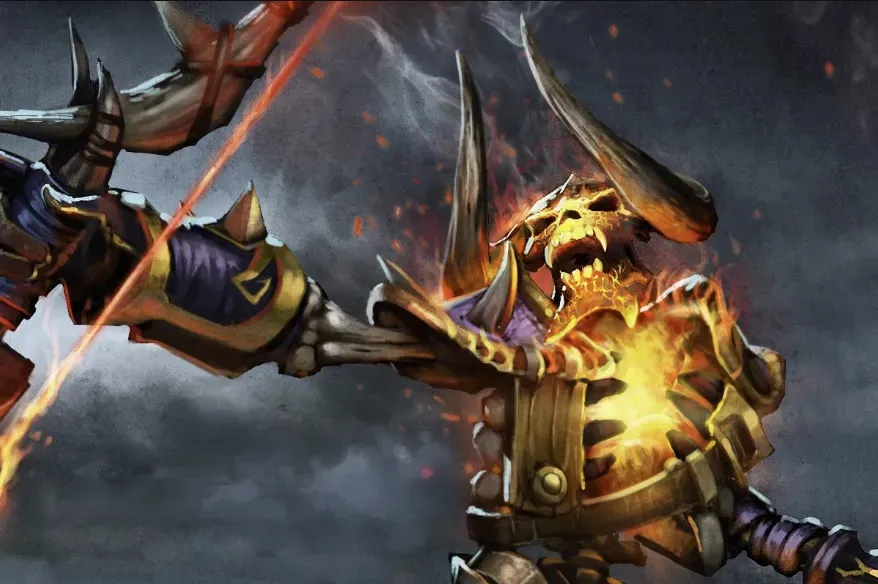
His skill Death Pact has gone through three distinct versions. Prior to patch 6.67, it killed a target unit and returned a percentage of its health. From 6.67 through 7.19d, it was changed so that Clinkz consumed a target creep to gain a portion of its hit points as maximum health and bonus damage. A further iteration spanning 7.23 to 7.27a introduced the concept of consuming enemy heroes under a debuff condition, with permanent damage bonuses on hero kills and the ability refreshing automatically when triggered.
His Searing Arrows ability, which imbued his attacks with fire damage, was a signature part of his kit for years before being replaced entirely in patch 7.40 by a new skill called Tar Bomb, a targeted projectile that deals magical damage on impact and leaves a slowing tar patch on the ground.
Strafe, his attack speed ability, also went through several iterations. Before 7.07, it granted a flat bonus of 130 attack speed. Between 7.07 and 7.22h, it was scaled per skill level (110/160/210/260) and also granted the ability to automatically dodge projectiles. Between 7.27b and 7.29d, the dodge was narrowed to apply only against ranged attackers.
The most recent significant round of changes came with patch 7.40, which removed the hero's facets Suppressive Fire and Engulfing Step, as well as the passive ability Bone and Arrow, which had allowed Clinkz to summon immobile skeletal archers under certain conditions. By the time 7.40 landed, Clinkz was meaningfully different from the hero that most long-time players had spent their early Dota 2 careers learning.
The International: A Venue History
The International has been Dota 2's defining annual event since the game's public launch, and its host cities form a geography of the game's global reach.
The inaugural International in 2011 was held in Cologne, Germany, as part of Gamescom. From 2012 through 2017, it was held in Seattle, United States, first at Benaroya Hall in 2012 and 2013, then at KeyArena for the following four years.
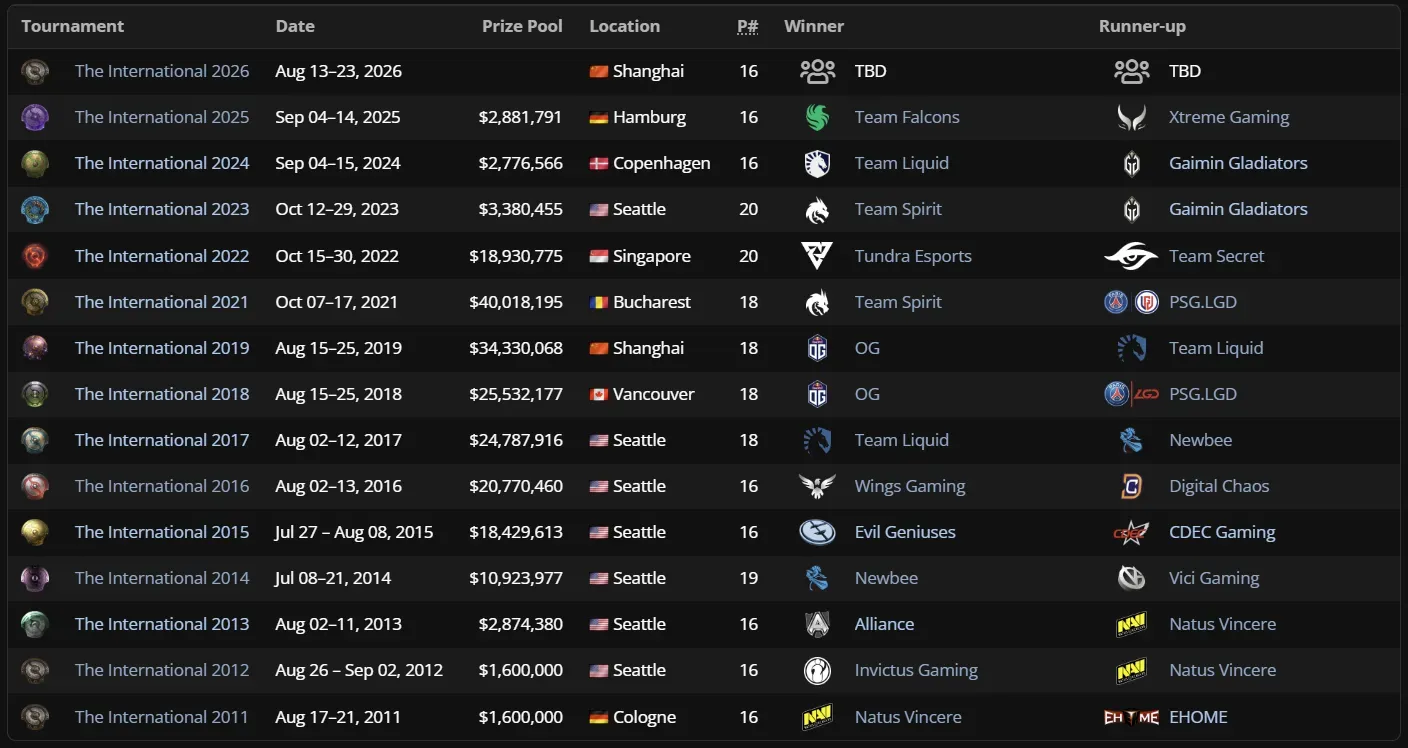
Vancouver hosted TI8 at Rogers Arena in 2018 when KeyArena underwent redevelopment. TI9 moved to Shanghai, China, at the Mercedes-Benz Arena in 2019, marking the event's first appearance in Asia. The tenth International, originally planned for Stockholm's Avicii Arena in 2020, was delayed a full year due to the COVID-19 pandemic and then relocated to Bucharest, Romania's Arena Nationala, where it was held without a live audience.
TI11 returned to Asia, this time to Singapore, where the event was split across two venues: the Suntec Singapore Convention Centre and the Singapore Indoor Stadium. It marked the first time the main event had been split between separate locations, with the group stage and playoffs occupying different spaces. TI12 brought the International back to Seattle in 2023, using the Seattle Convention Center and Climate Pledge Arena, the renamed successor to KeyArena.
TI13 in 2024 was held in Copenhagen, Denmark at Royal Arena, returning the event to Europe for the first time since 2011 in terms of a fully attended event. TI14 in 2025 was held in Hamburg, Germany at Barclays Arena, bringing the tournament back to Germany for the first time since its inception at Gamescom.
And TI15 in 2026 has been announced for Shanghai, China.
What Shanghai Means
That announcement sets the stage for something worth examining closely. The International returning to China is not simply a matter of geography. It carries weight for reasons that go beyond the venue choice, and those reasons connect directly to what this two-part piece is building toward.
Hey! Did you know we're about to run a FREE GIVEAWAY for an Shadow Fiend Arcana? Well, we are, and you can find out what to do by clicking below!

The second part will take a closer look at the Chinese Dota 2 scene, its history at The International, and why the 2026 tournament in Shanghai carries a particular kind of significance for the region's teams and their supporters. The numbers and history covered here in Part 1 provide the backdrop. Part 2 will bring the competitive story into focus.
TL;DR
- Dota 2 received 44 major patches between 2016 and 2025, with 2018 being the most active year at 13 patches
- Sixteen new heroes have been added to the roster since 2016
- Sixteen Arcana cosmetic sets were released across the same period, with 2020 producing the most in a single year
- Clinkz has been reworked multiple times, with Death Pact, Searing Arrows, and Strafe all undergoing significant changes; patch 7.40 marked the most recent major overhaul
- The International has been held across three continents; TI2026 is confirmed for Shanghai, China
ChaiViz
Article TAGS
Dota 2
The International
Patch History
Clinkz
Tournament History
News Feed
Loading...
Loading...
Loading...
Loading...
Loading...
Loading...
Loading...
Loading...
Loading...
Loading...
![No[o]ne- has been playing mid lane at the top of Dota 2 for over a decade, and 2025 proved he isn't done yet. Here's everything you need to know about the Ukrainian veteran rewriting his own legacy with PARIVISION.](/_next/image?url=https%3A%2F%2Floadbalancer.gocore.gg%2Fstrapi%2Fassets%2FRoad_to_EWC_Noone_X_81c0e5c49e.webp&w=3840&q=80)
![No[o]ne- has been playing mid lane at the top of Dota 2 for over a decade, and 2025 proved he isn't done yet. Here's everything you need to know about the Ukrainian veteran rewriting his own legacy with PARIVISION.](/_next/image?url=https%3A%2F%2Floadbalancer.gocore.gg%2Fstrapi%2Fassets%2Fsmall_Road_to_EWC_Noone_X_81c0e5c49e.webp&w=3840&q=80)